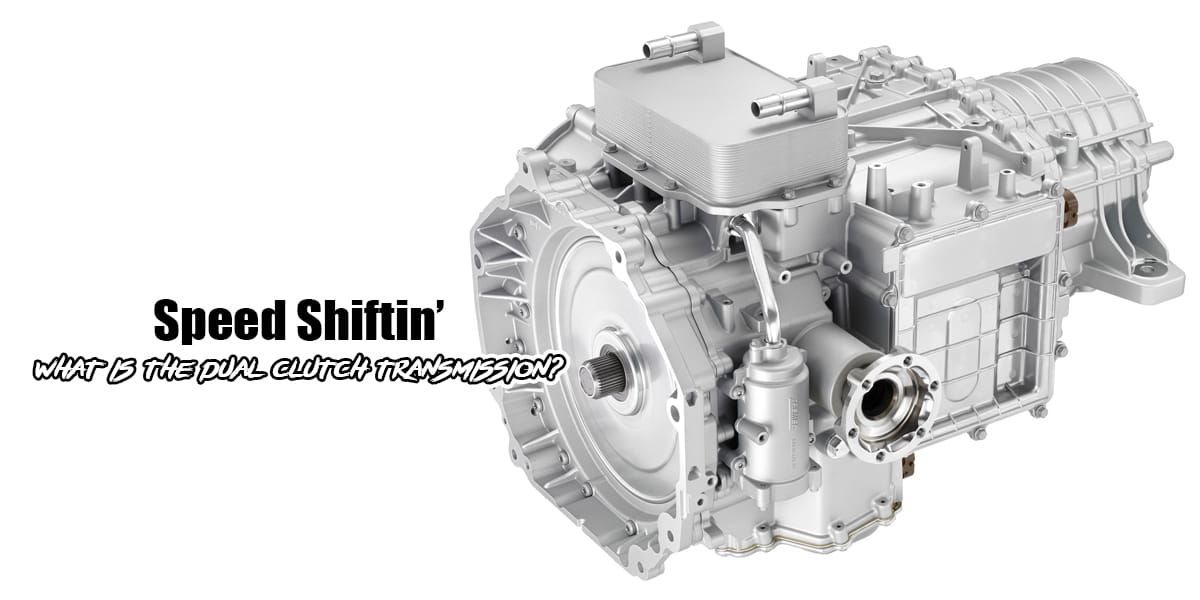
Speed Shiftin’: What Is the Dual-Clutch Transmission?
It has replaced the manual transmission, but what exactly is the dual-clutch transmission?
Quick Answer:
- It’s a version of an automated manual transmission.
- Many auto manufacturers offer a DCT under their own brand names.
- Instead of a single gear and a single clutch being engaged, two gears are selected and only engaged when that set’s clutch engages.
- One clutch operates odd-numbered gears; the other operates even-numbered gears.
The dual-clutch transmission, shortened to DCT, is the latest craze for auto manufacturers that don’t opt for the continuously variable transmission (CVT) and want to give owners the option to shift their own gears. It has many names, such as the Direct-Shift Gearbox (DSG) from Volkswagen, Porsche Doppelkupplung (PDK), Ford PowerShift, FCA’s Twin Clutch Transmission (TCT), AMG SPEEDSHIFT, and many others. However, they are all just OEM brandings of the same concept and are often made by the same suppliers if they are not built by the automakers themselves.
Who Makes DCTs?
The main supplying manufacturers are BorgWarner, with its DualTronic used by VW and Nissan; Getrag, which makes DCTs for BMW, Ferrari, Renault, Ford, Mercedes-Benz, Volvo, Smart, and Mitsubishi; Graziano for McLaren; LuK Clutch Systems' Parallel Shift Gearbox and XSG branded as the DQ200 from VW; Ricardo, which is used in the Bugatti Veyron; ZF with Porsche’s PDK; and finally Tremec and its TR-9070 DCT in the Ford Shelby GT500 and the TR-9080 transaxle in the Corvette C8.
How Do They Work?
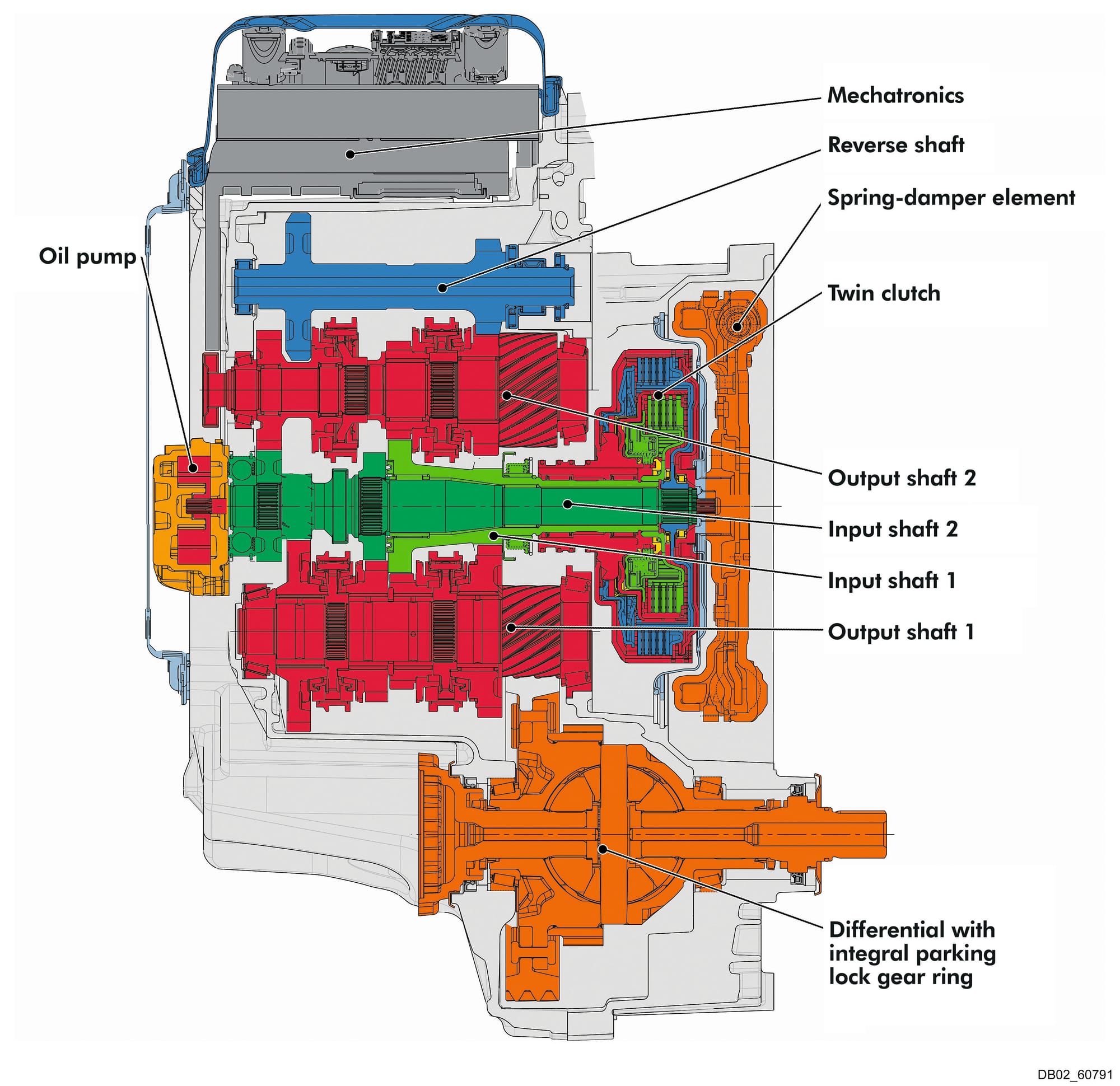
Whether used as a transaxle, rear-wheel-drive, or front-wheel-drive transmission, most DCTs work the same way. A pair of clutches attaches to the flywheel via a housing that closely resembles a torque converter and wets the clutches with transmission fluid. A concentric input shaft attaches to each clutch where one clutch rotates the outer shaft and the other rotates the inner. These concentric shafts rotate the gears: one shaft handles 1, 3, 5, and other odd-numbered gears, and the other shaft handles 2, 4, 6, and other even-numbered gears.
From here, it operates like a standard manual gearbox with shift forks engaging synchros on each gear. Two gears are always selected simultaneously, but engine power only routes to the engaged clutch and the input shaft attached to it. When you are in first gear, second gear is also selected, but it remains idle until the clutch for even gears engages.
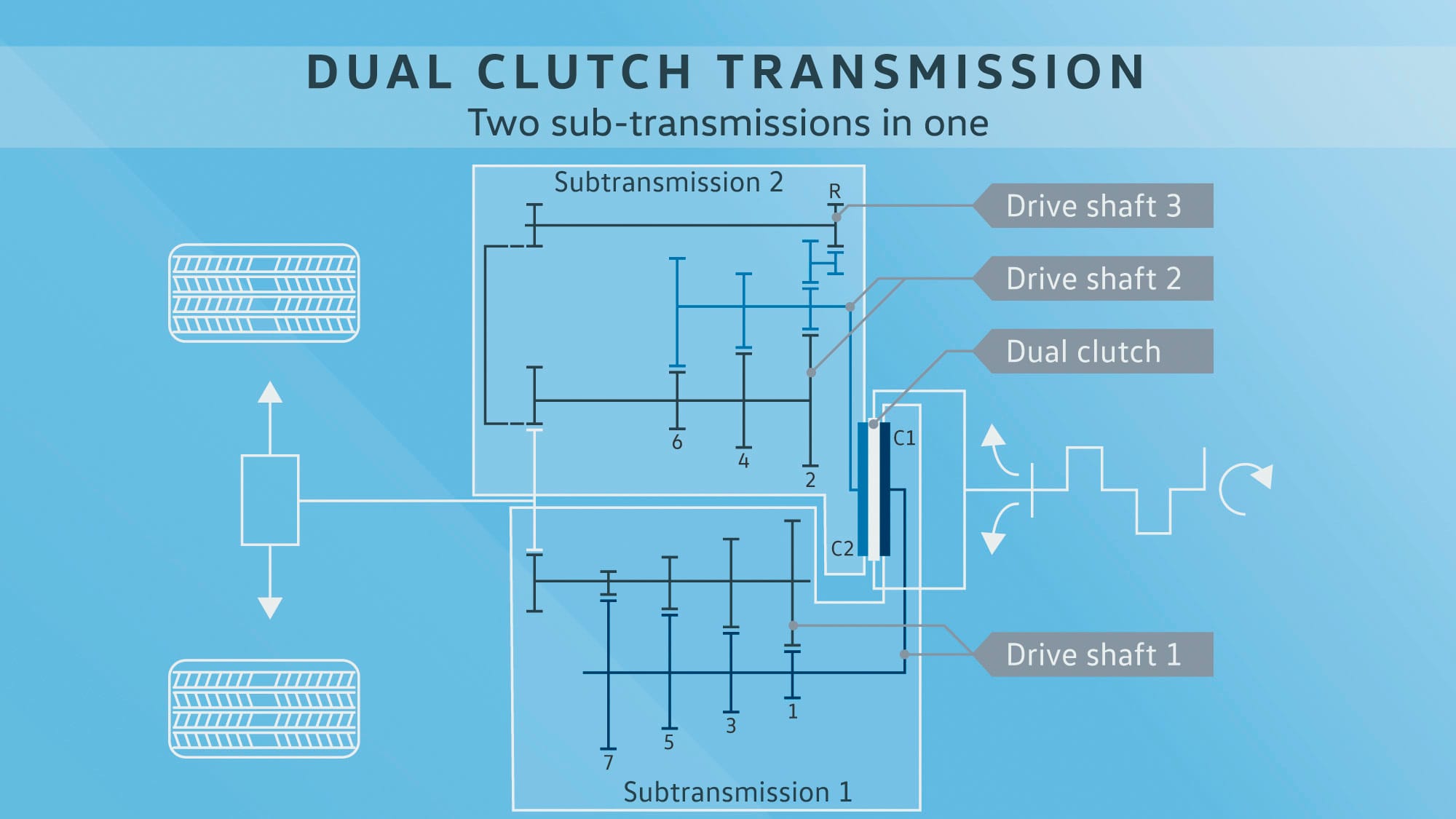
When you pull on the gear selector (which can be a paddle, shifter, or simply a button) or the computer tells the transmission control unit (TCU) to shift into second gear, the clutch for even gears engages and odd gears disengage. Finally, the next gear shift fork engages the next gear, which remains idle until the odd clutch engages. Continue this process as you move up each gear.
Downshifts feature a brief pause as the system instructs the shift fork of the lower gear to engage. However, most TCUs tell the powertrain control module (PCM) to rev the engine to match speed (better known as automatic rev-matching) to make the shift feel seamless. The computer can further predict this by detecting vehicle deceleration and driver braking. Well, in most cases. We will touch on that in a moment.
Dry Clutches and Parallel Clutches
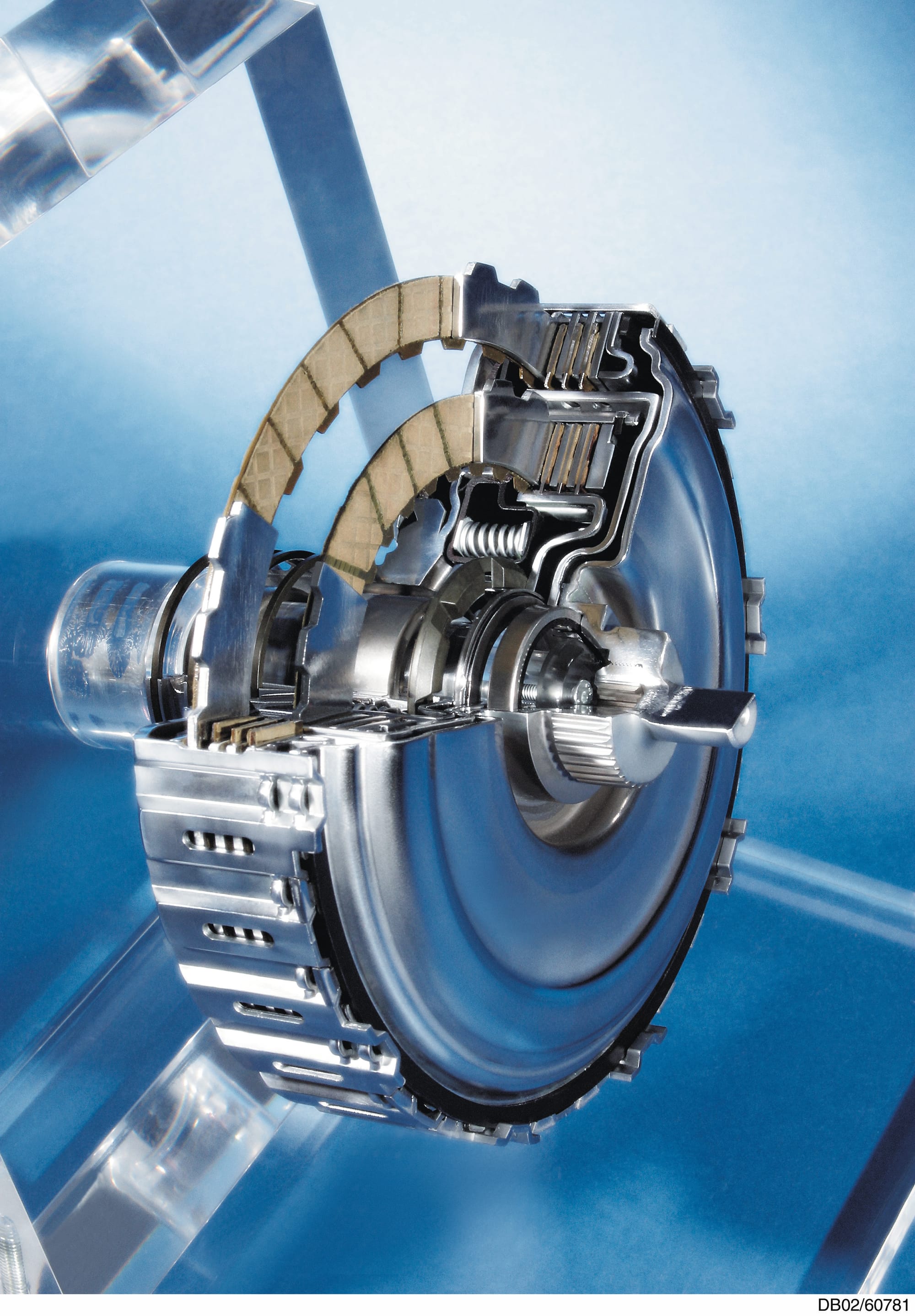
The difference comes in several FWD applications that use low-torque engines. In these cases, the clutches are dry rather than wet. There are also diverse ways the clutches lay out relative to the input shaft. One version sets the clutches side-by-side with a gear driving the input shaft. The other also places the clutches side-by-side but uses dual input shafts rather than a single shaft. The VW DQ200 and Kia/Hyundai DCT use dry clutch variations.
The Hyundai DCT, which Kia also uses, employs a pair of dry clutches, but the clutch package and engagement are more reminiscent of a standard clutch. It features a clutch fork, a clutch actuator that looks a lot like a standard slave cylinder stacked together, and a clutch bearing for each clutch. You would think it was a standard dual clutch like you see in performance cars, but it also features a concentric clutch shaft and dual gear shafts. It is worth an article by itself just explaining how it works. However, the principle remains the same as with all DCTs.
The Ease of the Automatic
Almost all auto manufacturers give the owner the option to run the DCT in automatic mode. In this mode, all shifting is handled by the TCU. All you do is control the gas, the brake pedal, and steer the car, just like an automatic. It even acts somewhat like an auto, as it will stay still when you release the brake and shift a gear too high until you hit the gas pedal for a "passing gear." This changes when you press the button or move the shifter into manual mode. From here, it holds your desired gear, will creep forward when you release the brake, and shifting (both up and down) is faster than you’re able to execute in an H-pattern box.
Because of its dual-clutch design, some of these transmissions can exhibit a shudder on takeoff from a dead stop. Some models are quite jarring when they shift. An example constantly brought up that does both is the Ford PowerShift automatic. Although it does not give an option to shift manually like performance cars, it’s not an automatic transmission in the traditional sense. It is a DCT with the manual shift option removed. Hyundai and Kia also employ an automatic-only DCT but are limited in their applications.
The reason to use a DCT in place of an automatic is typically twofold. The first reason is efficiency: It is hard to beat the reduced friction between two gears driven directly by a single clutch (for each gear) over a planetary gear set, pumps, and its clutches. The second is weight: Given all the fluid, extra metal, and physical size of most automatics, the DCT is usually lighter.
The Performance of the Manual
With a DCT, you get the best of both worlds for a performance car. The owner can place the car into automatic mode for daily driving or shift into manual mode when out on the track or enjoying a fun drive on a country or mountain road. Legal speeds, of course. For giggles, you also usually get the choice of using the "flappy paddles" behind the steering wheel (the only way in the C8 Corvette) or operating the shifter just like you can in a real race car with an inline shift pattern, where pushing it forward shifts down and pulling the stick back shifts up.
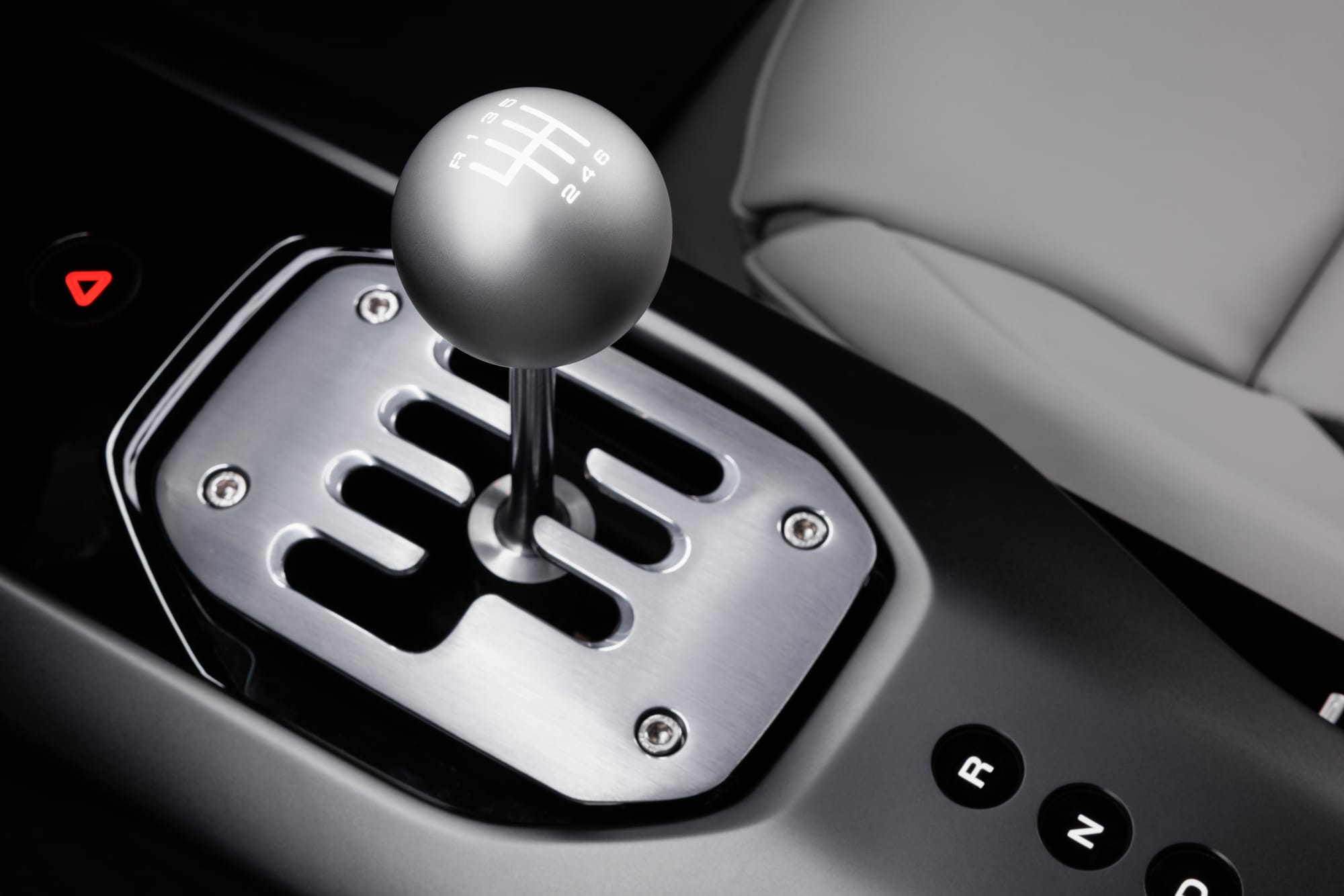
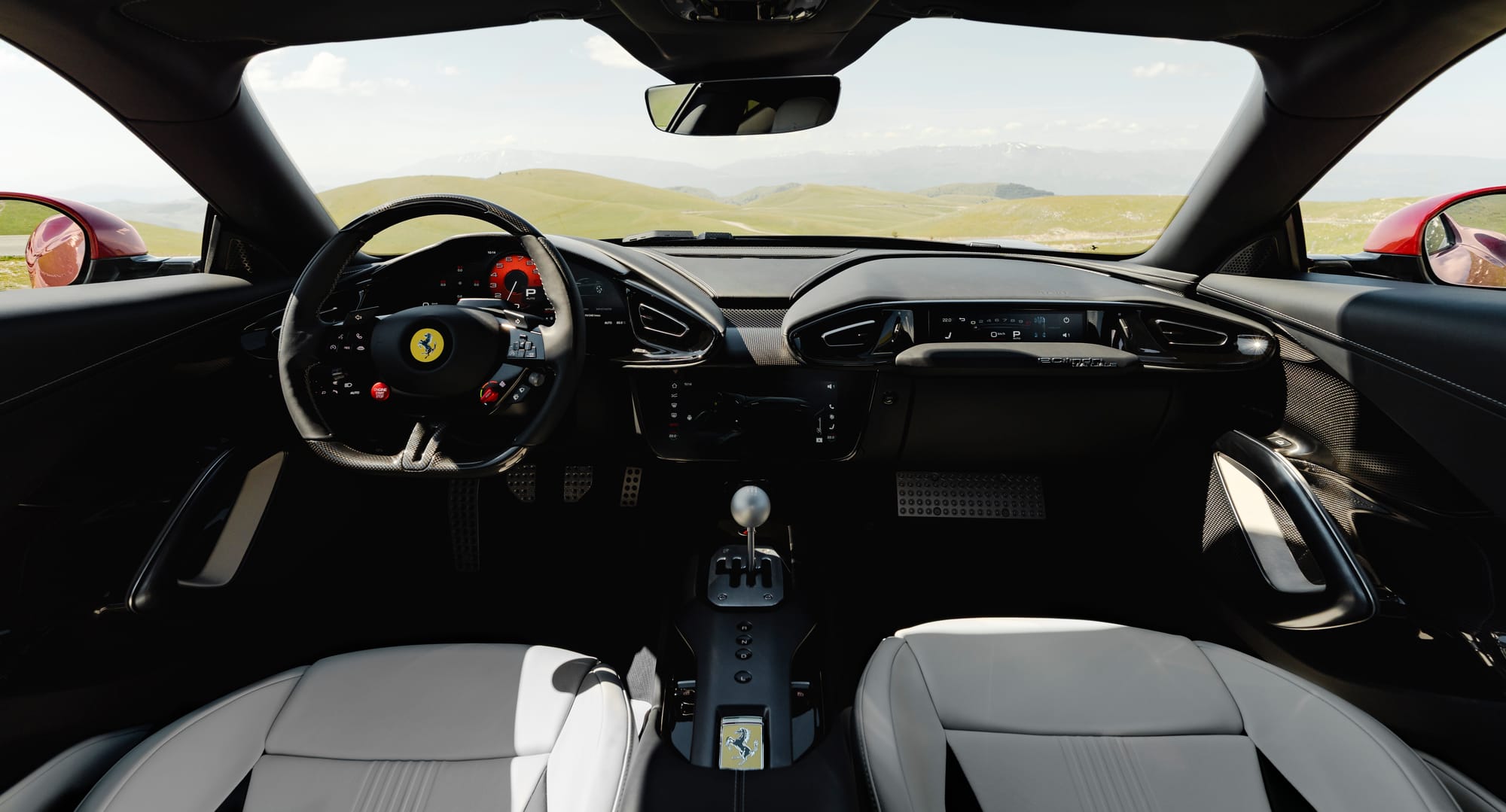
Ferrari, however, is changing this up. Instead of just an inline shifter and paddles behind the steering wheel, it’s offering customers of the 12Cilindri called the Manuale that will offer owners a gated shifter and a clutch pedal. You can stall this supercar and can do somewhat of a mis-shift, but both the pedal and the shifter are not connected to its DCT directly. It’s all wires and programming for the 12Cilindri Manuale, but owners will also be limited to just six of the eight gears.
Before You Go
If this technical explainer on DCTs helped you understand how they work and why they are so complex, consider backing us on Patreon.
Carbage.Online is 100% independent. We don't take money from manufacturers to write biased reviews, and we don't run annoying pop-up ads. We are funded strictly by fellow wrenchers and enthusiasts.
- Behind-the-scenes garage logs as we build our project cars.
- Early access to technical breakdowns.
- Exclusive voting power on which platform we tear down next.
Become a Carbage Patron on Patreon
Comments ()