
NACS, CCS, and J1772 Explained: The Complete Guide to EV Charging Ports and Speeds
Electric vehicles need power, and how you charge them determines how much you spend each week.
Quick Summary:
- Different Connectors: Most new EVs use NACS, but J1772, CCS, and CHAdeMO ports remain on older models
- Always Charge at Home: The best time to charge past 80% is at home
- DC Fast Charge When Needed: DC fast charging should only be used to get you to your destination or up to 80% charge.
- DC Fast Charging is Always Expensive: DC fast charging costs significantly more than AC home charging.
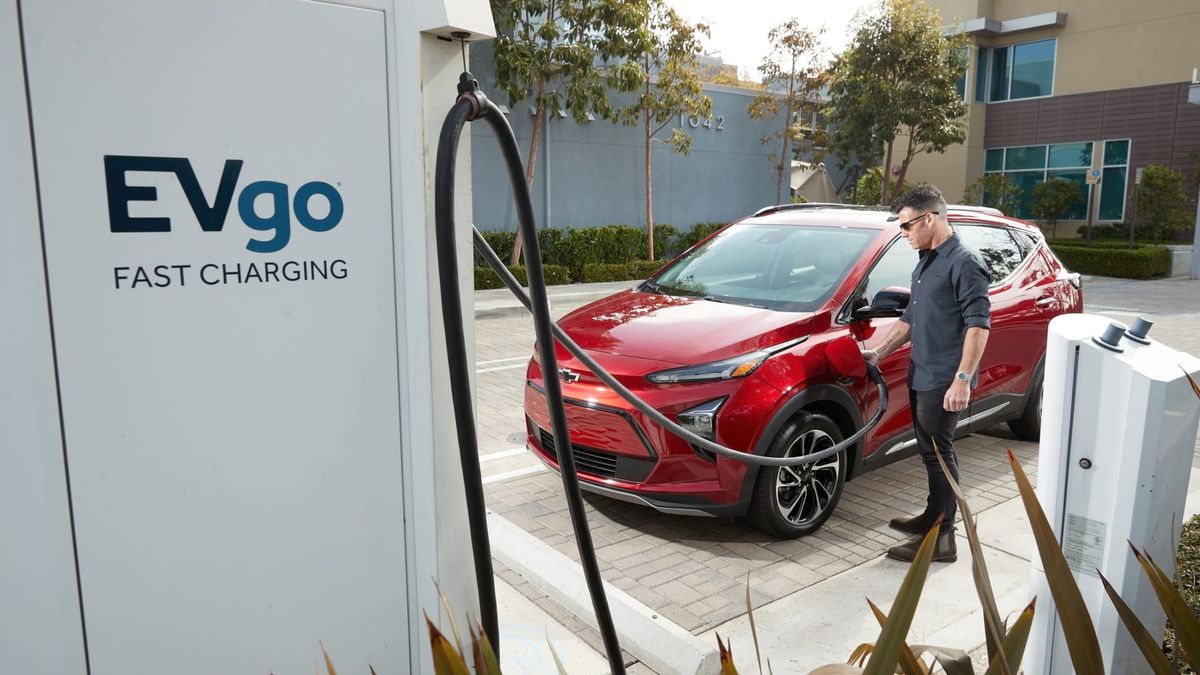
If you are new to electric vehicles (EVs), charging can feel daunting. Some EVs come with a native NACS port and plug right into a Tesla Supercharger. Others use a bulkier connector, yet charge faster in specific scenarios. Nissan used one port design for years on the early Leaf before switching entirely.
What does all of this mean, why do DC fast-charging rates vary so widely, and what equipment should you actually use? This guide breaks down how and when to charge your EV without wasting time or money.
What Type of Charging Port Do I Have?
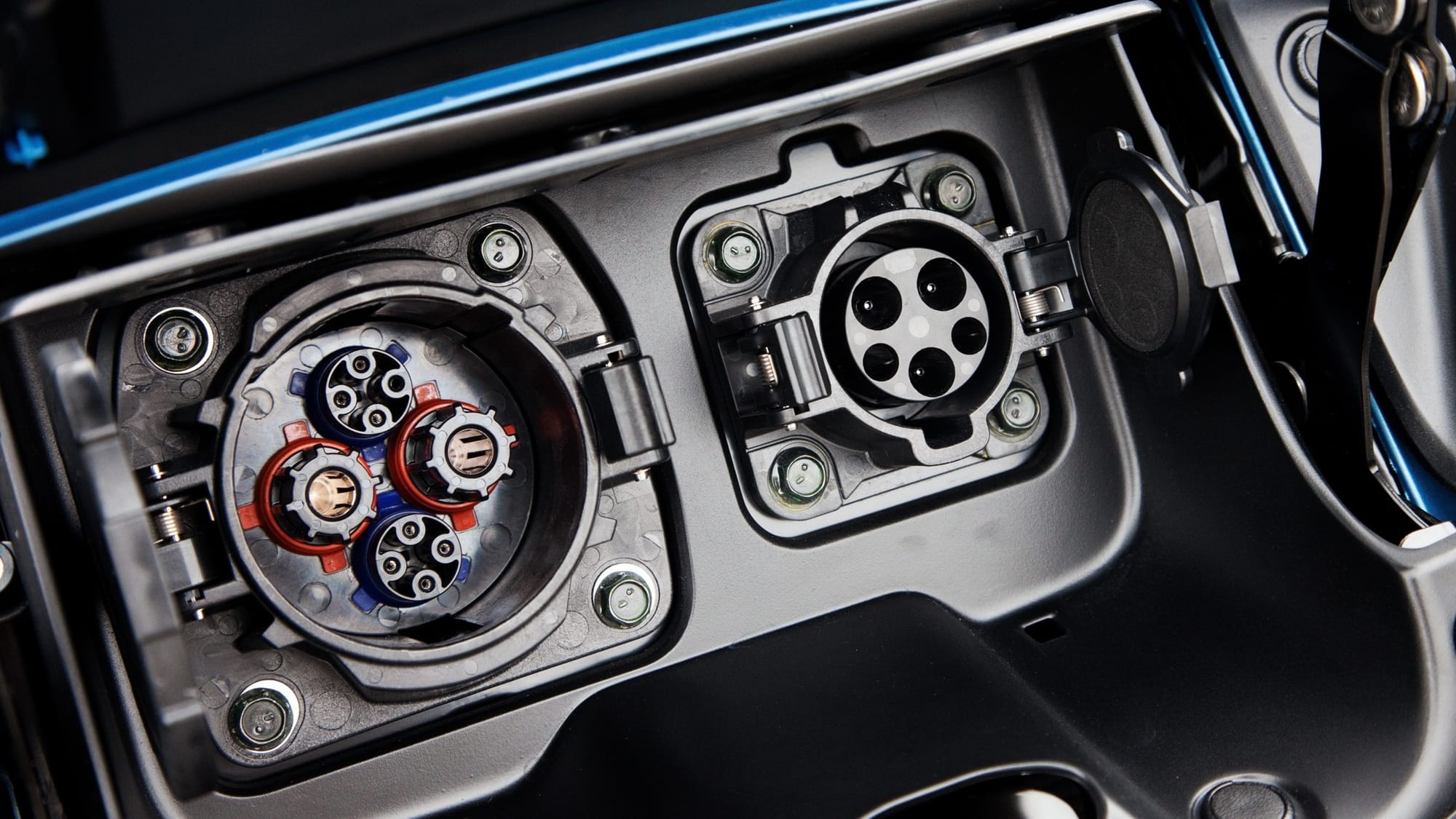
Key Facts: Four main charging standards have shaped the modern EV market | Modern U.S. vehicles are standardizing around NACS
In the earliest days of mainstream modern EVs (with apologies to GM EV1 enthusiasts), four distinct charging standards emerged.
J1772 AC Charger
Key Facts: Standard AC connector introduced in 2001 | Redesigned into a five-pin round layout in 2009
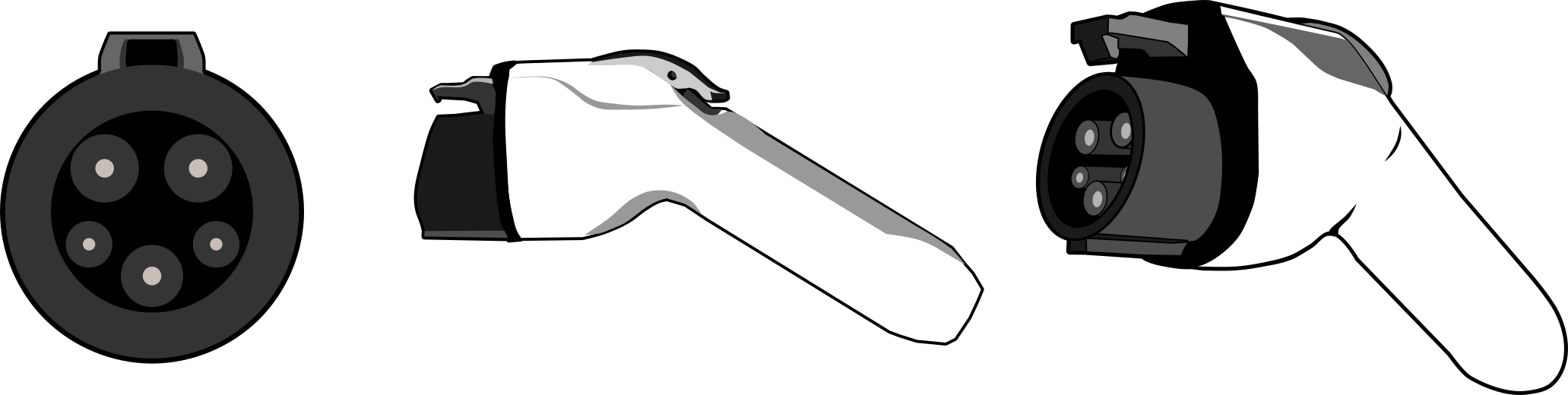
The first standard for AC (alternating current) charging was the J1772 connector, introduced in 2001 for both the U.S. and Europe. You can recognize the original version by its D-shaped port with seven pins.
A 2009 redesign for the U.S. market introduced the round, five-pin layout used ever since. The top two pins handle Line and Neutral, and the center-bottom pin provides Ground for the AC connection. Two smaller communication pins sit beneath them: the Control Pilot pin, which signals the charger to supply power, and the Proximity Detection pin, which tells the car a cable is latched and confirms its current rating.
If you are driving a plug-in hybrid or range-extended vehicle, you will almost exclusively use J1772 AC charging rather than DC fast chargers. For a complete mechanical breakdown of how these electrified powertrains differ under the skin, read our guide on HEV vs. PHEV vs. EREV Powertrains Explained.

Tesla Port (NACS / SAE J3400)
Key Facts: Combines AC and DC fast charging in one compact head | Standardized as SAE J3400
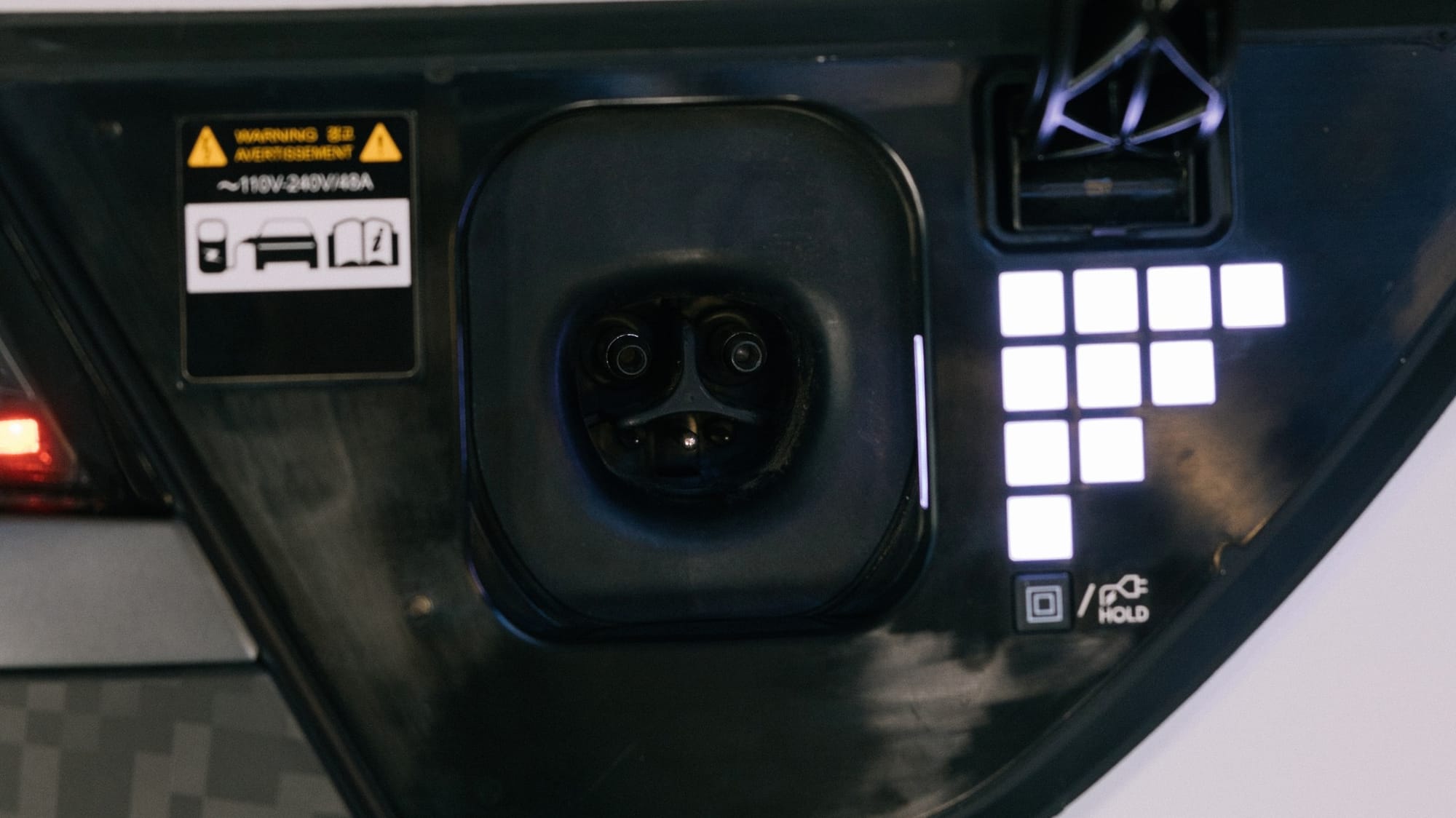
Between the 2001 and 2009 J1772 revisions, Tesla developed a proprietary connector that handled both AC and DC charging. It debuted on the 2008 Tesla Roadster as a bulky four-pin plug unique to that sports car. In 2012, alongside the Model S and the Supercharger network, Tesla redesigned the connector into the compact profile standardized today as SAE J3400, widely known as the North American Charging Standard (NACS).
It uses a sleek, semi-circular shape with two large primary pins for both AC and DC power transfer, plus three smaller pins for communication between the car and the charger. The V3 Superchargers are only able to charge up to 250 kW, but V4 units are capable of 325 kW and Tesla is rolling out higher-voltage versions that will soon support up to 500 kW. Non-Tesla DC fast chargers that offer NACS connections are capable of higher rates to meet the demand of 800 volt EVs.
CHAdeMO: The Japanese DC Standard
Key Facts: Dedicated DC fast-charge port introduced in 2010 | Featured a 10-pin circular configuration
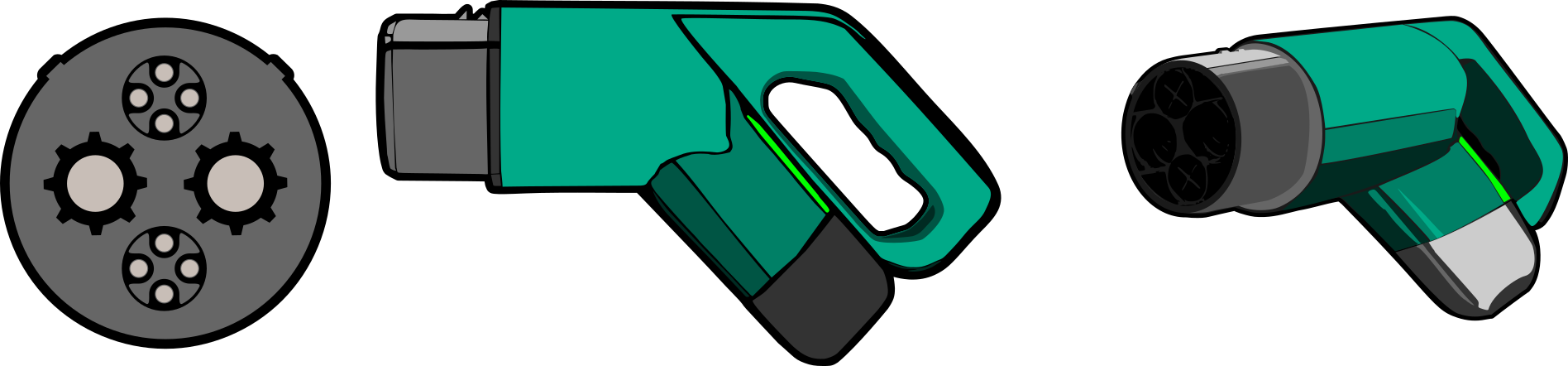
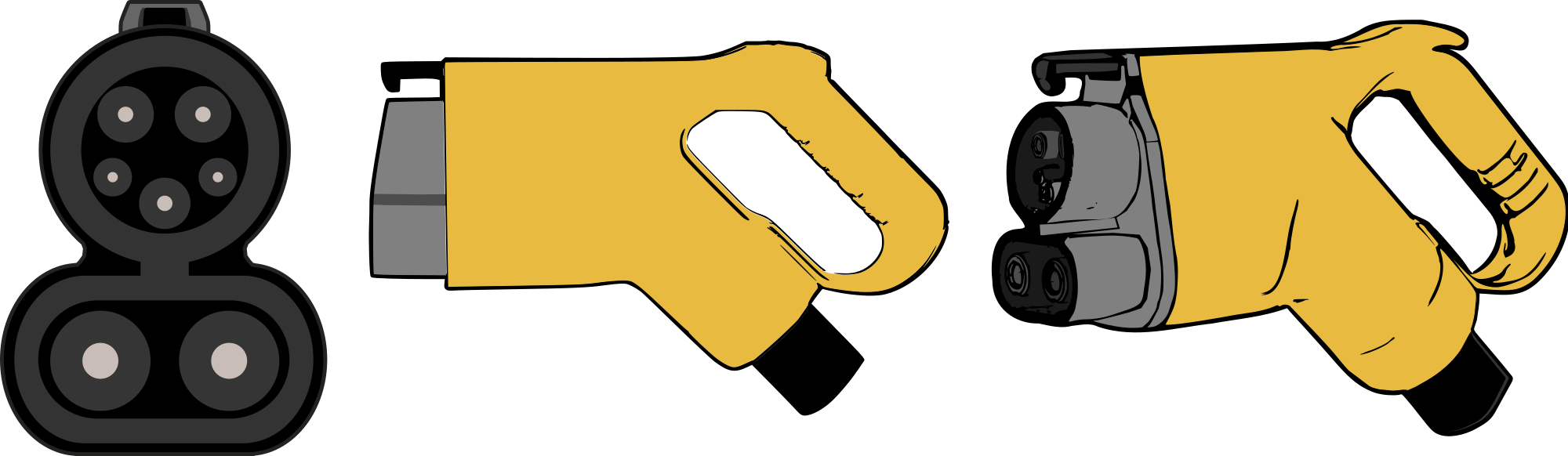
Introduced in 2010 on the Mitsubishi i-MiEV and the first-generation Nissan Leaf, CHAdeMO served as the dedicated DC fast-charging standard developed by Tokyo Electric Power Company and Japanese automakers.
It is a large, circular 10-pin plug with a cross pattern. The upper and lower pin clusters manage vehicle-to-charger communication, safety grounding, and CAN bus data channels, whereas the two large center pins carry DC positive and negative current.
Combined Charging System (CCS)
Key Facts: Added high-voltage DC pins below the standard J1772 layout | Rolled out across North America and Europe in 2012
Other automakers adopted the Combined Charging System (CCS), which debuted in 2011 and launched across the U.S. and Europe in 2012.
The North American version, known as CCS1 (or J1772-CCS), built directly on the round J1772 design by adding two large direct-current pins directly beneath the AC port. The top pins handle AC power and signaling, whereas the larger lower pins route dedicated high-amperage DC power during fast charging.
NACS Becomes the Industry Standard
Key Facts: Nearly all automakers in North America have transitioned to NACS | Some brands retain dual AC/DC charge ports for flexibility
For most EVs built for North America, the NACS inlet is the default standard for both AC Level 2 and DC fast charging. Automakers refer to this factory hardware as a native NACS port.
Some manufacturers, including Porsche and Audi, have retained dual charging ports on select models. In those setups, you will often find a dedicated J1772 AC port on one fender and a combined CCS fast-charging port on the other. This configuration offers convenient compatibility for owners who already have a J1772 home charging station installed.
How Is Battery Capacity Calculated?
Key Facts: Total energy is measured in kilowatt-hours (kWh) | Automakers reserve a 10% to 20% capacity buffer for battery longevity
Electrical power is straightforward: watts equal volts multiplied by amps. If a small 3-volt battery delivers 3 amp-hours (Ah), its total storage capacity is 9 watt-hours (Wh).
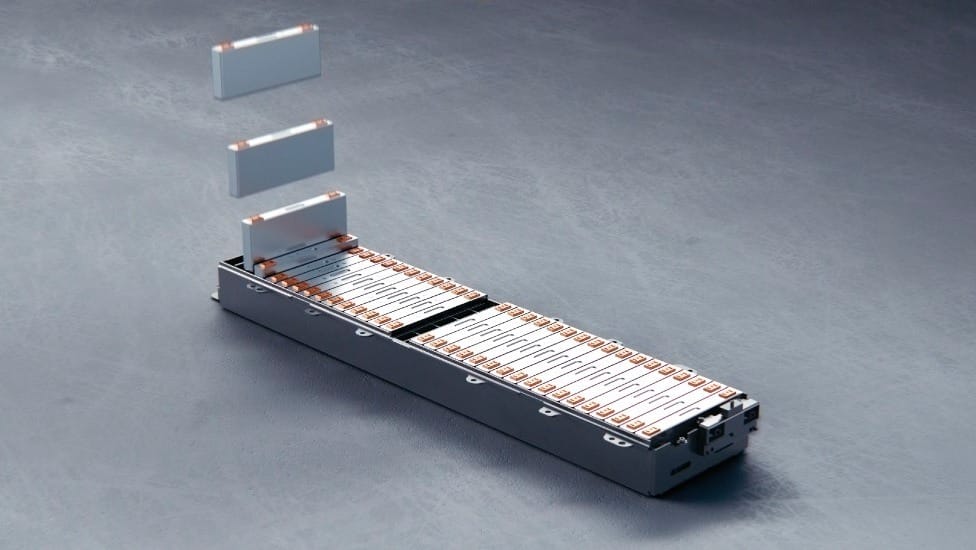
EV traction batteries operate at much larger scales, typically running 400-volt or 800-volt architectures with capacities measured in kilowatt-hours (kWh). These packs connect hundreds of individual cells in series to elevate voltage, and in parallel to supply thousands of amps. For example, a 400-volt pack rated at 175 Ah yields 70 kWh of energy storage (70,000 Wh).
Automakers often build a 10% to 20% software buffer into the pack above the usable rating as this buffer protects overall pack health by distributing current away from degraded cells as the battery ages. Automakers are also experimenting with alternative pack sizing strategies to balance charging times and weight, as seen in Hyundai's Santa Fe EREV powertrain strategy, which pairs a smaller battery pack with an onboard combustion generator.
Best Practices for EV Charging
Key Facts: Before Charging, inspect your port and connector for debris and damage | Daily charging to 80% SOC maximizes pack life | Fast chargers are best reserved for road trips
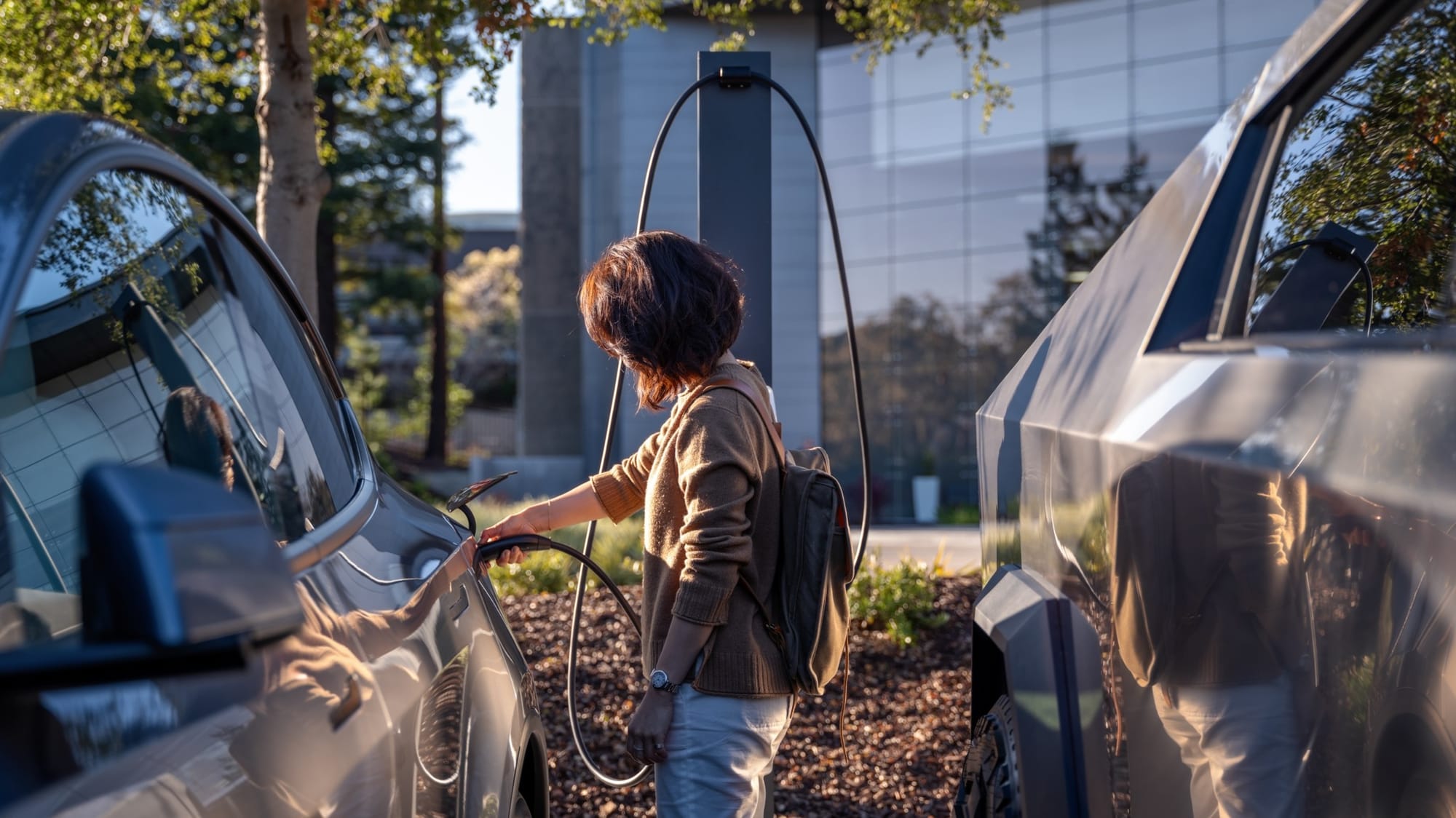
Before you plug up and start charging, you should always inspect the condition port and connector pins, especially the DC pins for fast charging. Look for any debris or contamination and blow it away using compressed air and only use soft plastic bristle brushes if you can’t dislodge anything with the air.
Also look for signs of overheating (usually a discoloration around the plastic surrounding the pins), and any sort of electrical arc damage. For that latter damage, look for any black, sooty marks on the pins. If you see any of that, take your EV to your dealer for further inspection and cleaning.
Slower AC charging keeps battery temperatures manageable and that protects internal cell chemistry. For daily driving, set your vehicle's charge limit to 80% state of charge (SOC) to prolong battery longevity.
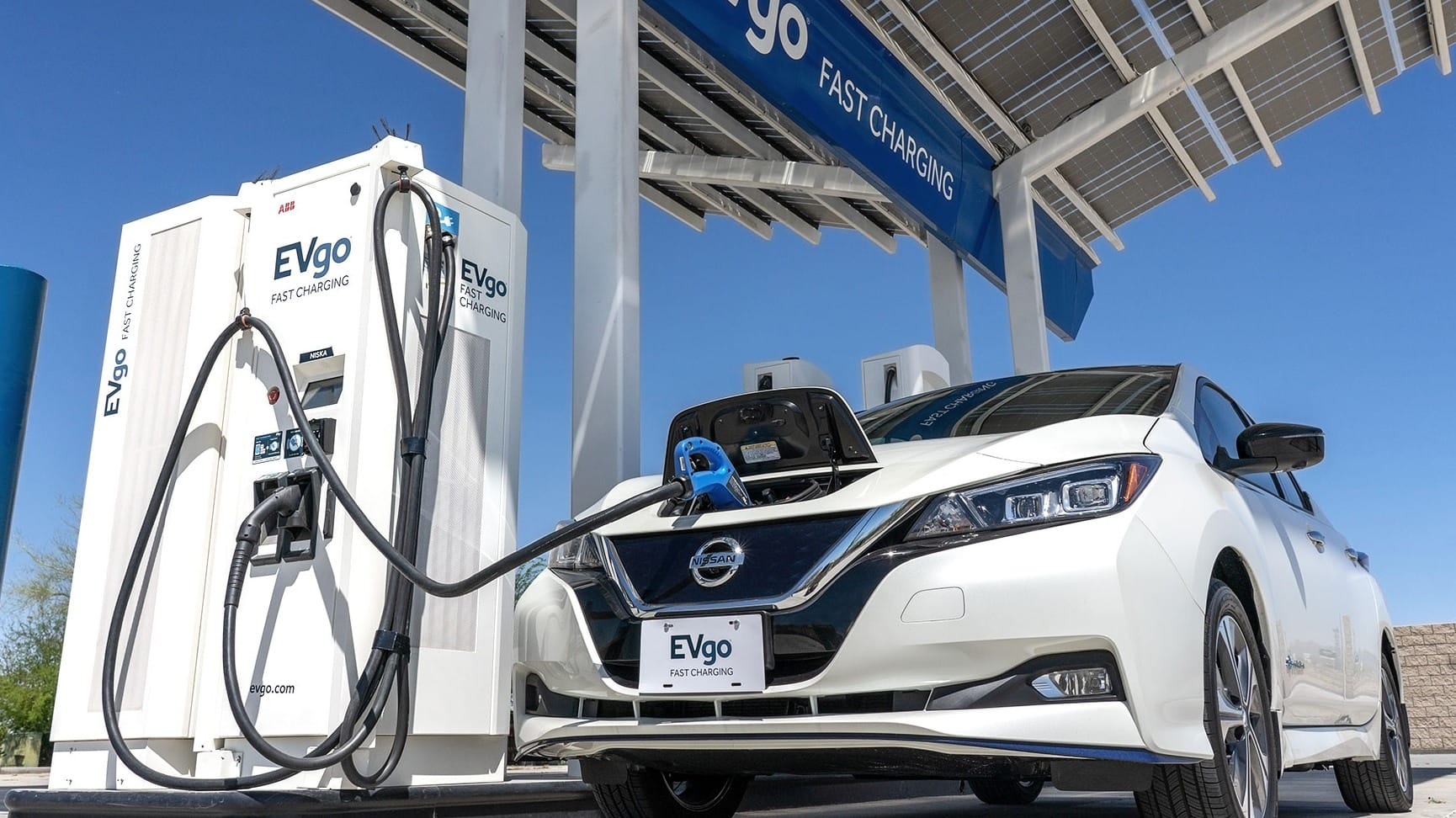
DC fast chargers deliver high kilowatt output, but that massive energy transfer generates substantial heat and comes at a higher financial cost in the monetary charge per minute. Reserve DC fast charging for long-distance road trip top-ups or quick midday ones when you need range immediately.
Your vehicle also controls the maximum charge rate it will accept. If an EV has a factory DC charging cap of 50 kW, plugging into a 350-kW charger will still supply only 50 kW.
If you need to stop charging before your session is scheduled to end, do not remove the plug while charging. First try to cancel charging at your vehicle. If that fails, cancel at the charger tower's screen where you activated your charge.
Only if you're in an emergency should you pull the connector before the charger has ramped down the current to safe levels. Doing so without allowing the charger to power down will result in arc damage to the port and connector. It also increases the risk of electrical shock to yourself.
The Home-Charging Advantage
Key Facts: Level 1 and Level 2 AC home charging minimizes pack degradation and saves money
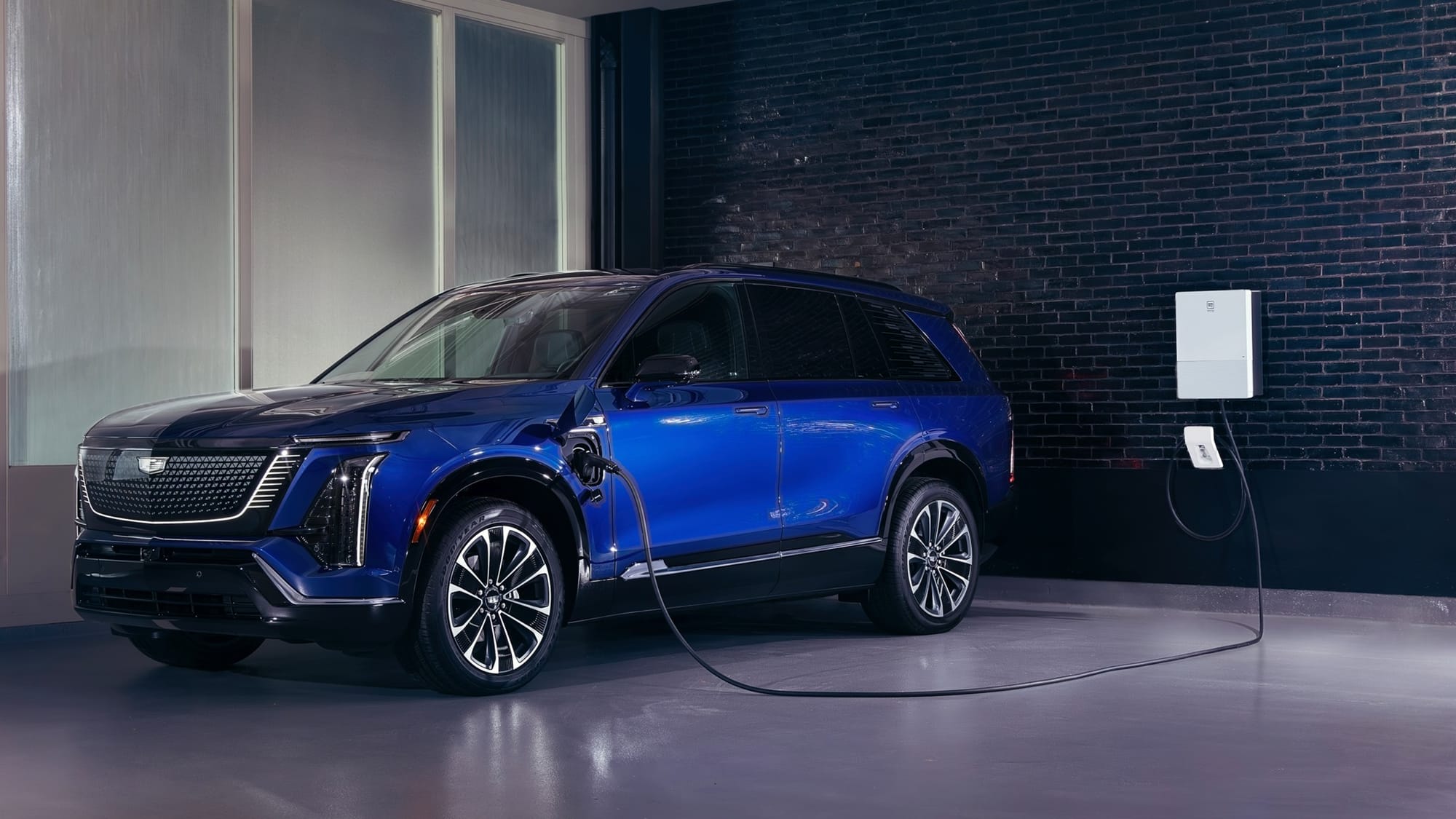
The single biggest operational advantage an EV holds over a conventional gas or hybrid vehicle is home replenishment. Daily Level 2 home charging is also the primary advantage for plug-in hybrids, where short daily commutes run entirely on battery power charged by inexpensive residential electricity. AC charging takes longer, but you can plug into a standard 120-volt household wall outlet or a dedicated 240-volt circuit. Your actual charging speed depends on your circuit breaker's rated amperage and your EV's onboard charger limit.
Charging on 120-Volt AC Power (Level 1)
Key Facts: Standard 15-amp wall outlet | Delivers roughly 1.8 kW of power
A standard 120-volt household circuit on a 15-amp breaker supplies roughly 1.8 kW of Level 1 power. Replenishing an empty 70-kWh battery on a 120-volt circuit takes roughly 40 hours. Ambient temperatures, battery condition, and thermal management demands can extend your charge time further.
Charging on 240-Volt AC Power (Level 2)
Key Facts: 240-volt circuits deliver between 5.8 kW and 11.5 kW | Fully recharges a typical pack overnight in 6 to 14 hours
A 240-volt residential circuit provides faster Level 2 charging, but common household 240-volt installations use 30-amp to 60-amp breakers.
Under continuous electrical load rules, equipment will draw only 80% of a breaker's rated capacity. A 30-amp breaker supplies 24 amps continuously (roughly 5.8 kW), whereas a hardwired 60-amp circuit supplies 48 amps (11.5 kW).
Replenishing our baseline 70-kWh pack from earlier takes 12 to 14 hours at 5.8 kW, or six to seven hours on an 11.5-kW connection.
Charging on DC Fast Chargers (Level 3)
Key Facts: Fast chargers bypass the onboard converter to supply 50 kW to 350+ kW directly | Charging curves taper past 80% SOC
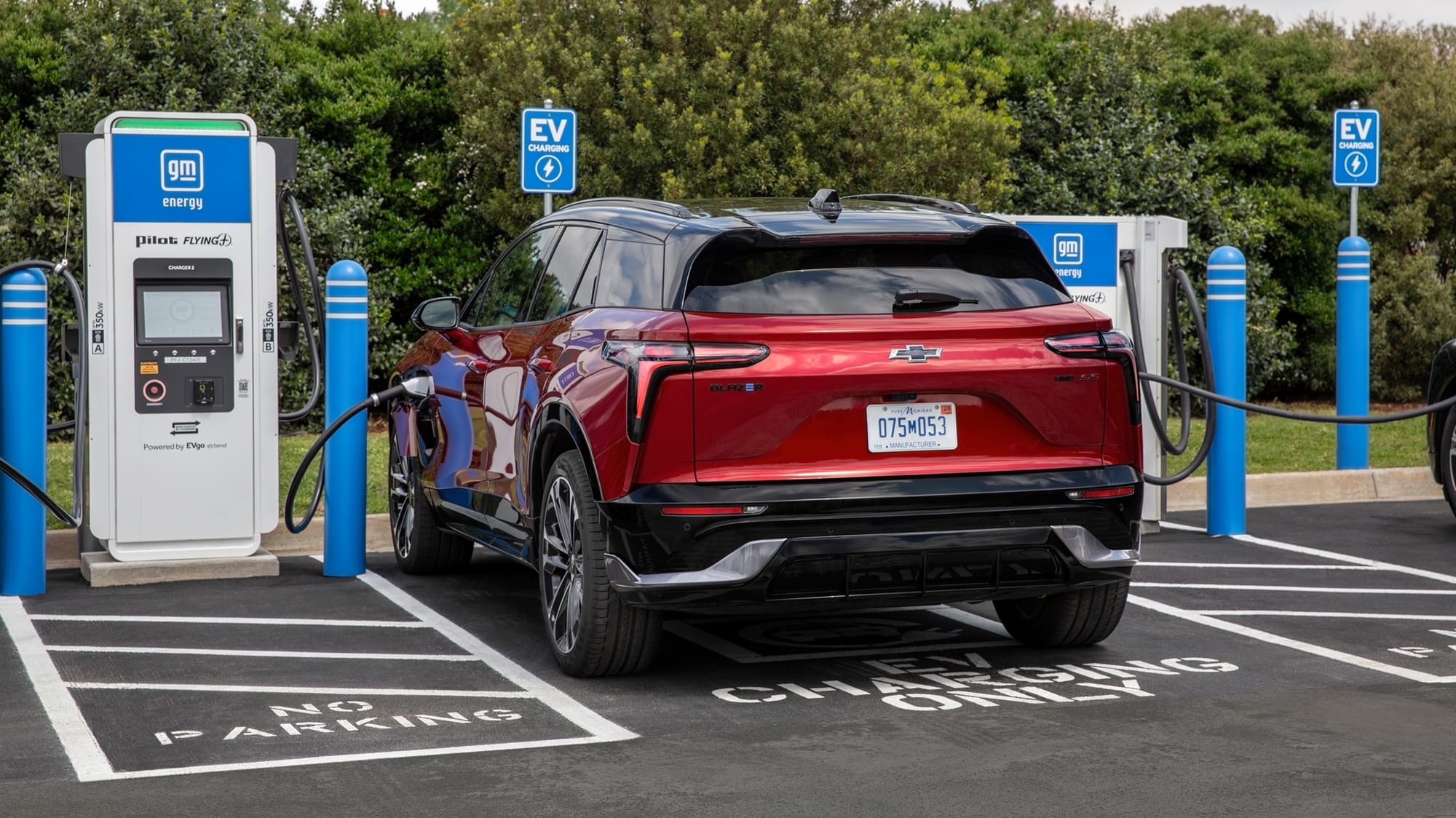
DC fast chargers supply high-voltage direct current straight to the traction battery, bypassing the car's onboard AC-to-DC converter. Tesla Superchargers output up to 250 kW on 400-volt architectures, whereas CCS and updated NACS stations can deliver 350 kW or more for 800-volt platforms. Older CHAdeMO stations generally top out at 50 kW.
Real-world charging speeds also depend heavily on vehicle software optimization and thermal management hardware. Charging speeds will decrease as the battery “fills” and this is to prevent lithium plating and manage thermal resistance. The vehicle's battery management system throttles charge rates down as the pack approaches 80% SOC. In hot ambient conditions above 80 degrees Fahrenheit, thermal limits can slow down high-output charging sessions even earlier.
A final note on DC fast charging. Your battery isn’t the only part keeping its thermals in check as the charging cable and connector must also remain cool for your use. This is done by running coolant from the charging cabinet to the cable and connector and back again to remove the heat the coolant has transferred. Both the connector and cable may feel warm, but you should be able to touch it without feeling uncomfortable. If it does start feeling too hot, stop your charging session and alert the network operator.
Why DC Fast Charging Should Be Kept to a Minimum
Key Facts: Commercial DC fast charging costs around $0.55 to $0.70 per kWh | Home AC power averages roughly $0.20 per kWh
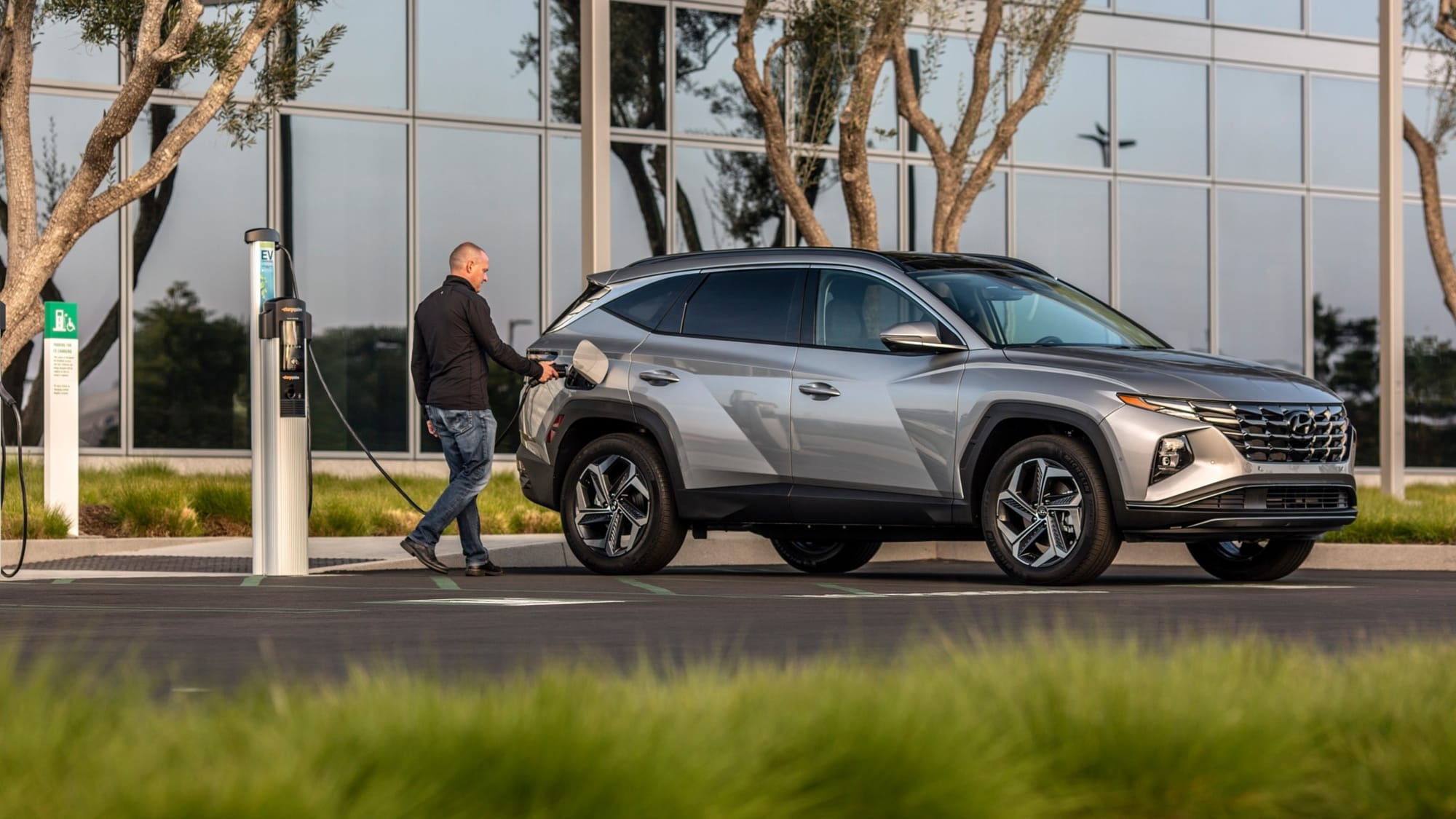
Commercial DC fast charging costs significantly more per mile than charging at home. Fast-charging networks average roughly $0.55 per kWh nationwide, and frequently reach $0.60 to $0.70 per kWh in regions like California.
Residential electricity averages around $0.20 per kWh nationally. Charging overnight at home during off-peak hours provides the most convenient, cost-effective ownership experience.
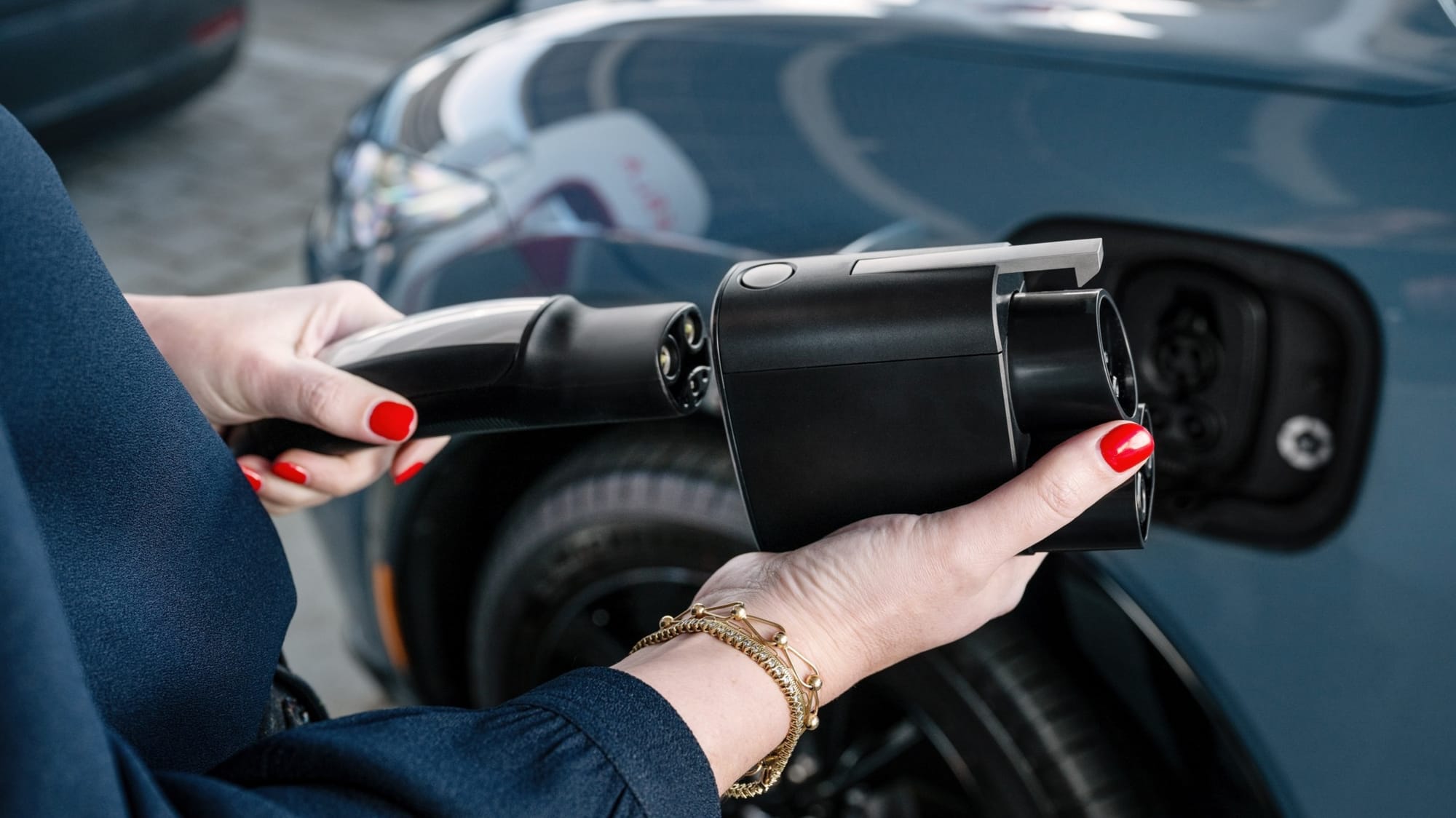
Using Adapters for Interchangeability
Key Facts: Adapters allow for interoperability between connector standards | Be sure any adapter is UL2252 certified
If you need to use an adapter for your EV at a DC fast charging station, first make sure it’s rated for DC charging. Adapters are usually only designed for one type of charging and can look similar to one another. You should also only buy an adapter from your dealer or a known seller like Lectron or A2Z EV, though many OEM adapters are made by Lectron. If you find an alternative, be sure that it is rated by UL Solutions for compliance under UL 2252. This safety standard ensures that adapters are designed and constructed to the highest standards and inspects for insulation resistance, short circuit protection, and proper grounding.
Support Independent Automotive Journalism

If you enjoy deep-dive technical guides and no-nonsense engineering breakdowns, consider supporting Carbage directly. Join our community on Patreon for exclusive behind-the-scenes content, or pick up fresh apparel and stickers in the Carbage Merch Shop.

Comments ()