
Hyundai Unveils Santa Fe EREV, New Battery Tech at CEO Investor Day
The South Korean brand says the first EREV models will launch in the first half of 2027.
Quick Summary:
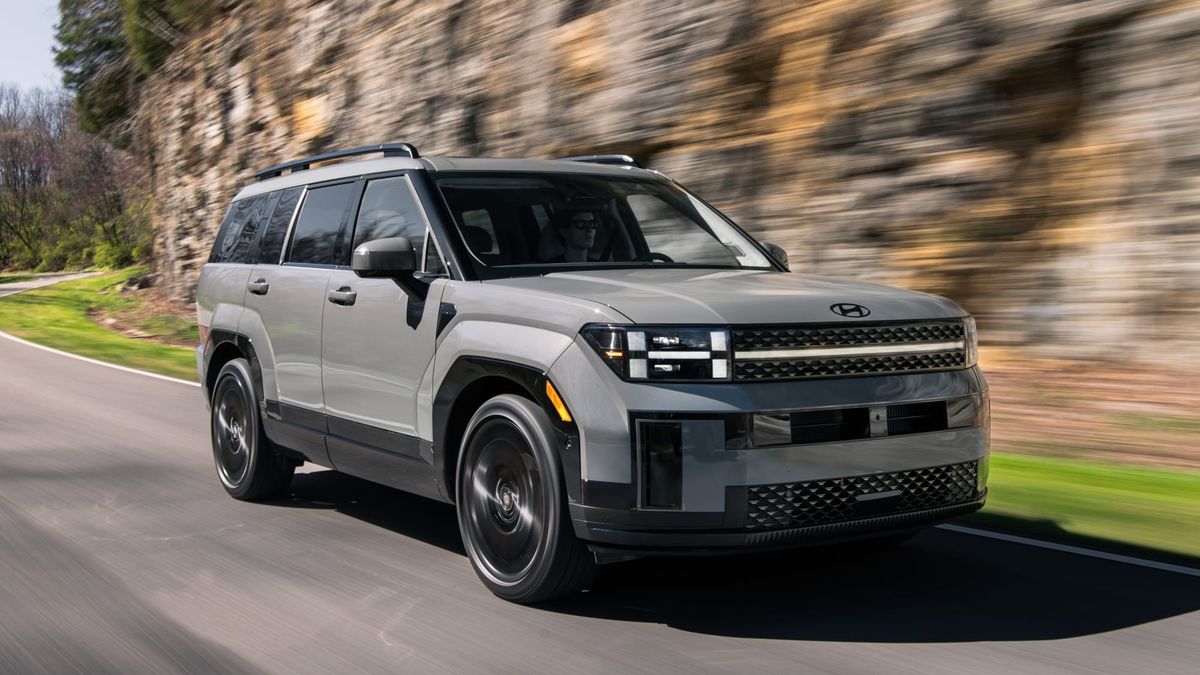
- Santa Fe EREV: Built in Alabama, the new Santa Fe EREV will launch by the first half of 2027.
- Genesis EREV Coming: Along with the GV80 Hybrid, Genesis will get an EREV by early 2027.
- Hyundai Is Building Its Own Batteries: To support these EREVs as well as other hybrids and EVs, Hyundai will begin manufacturing its own cells.
- Midsize BOF Pickup Still Coming, Sold Globally: Hyundai also reaffirmed its commitment to a body-on-frame pickup built in the U.S. and sold worldwide.
During its 2026 CEO Investor Day, Hyundai unveiled its road map through 2030. The automaker reinforced its goals for higher sales volume, expanded vehicle lineups, and scaled commercial robotics via Boston Dynamics. It also outlined plans to grow its high-performance N brand and autonomous driving technologies. The headline news for the industry, however, was the announcement of the Hyundai Santa Fe EREV: an electric-first hybrid model scheduled to arrive in the first half of 2027.
An EREV Santa Fe to Be Built in Alabama
Key Facts: Santa Fe EREV built in the U.S. | Targeting 600 miles of range | Arriving 1H of 2027
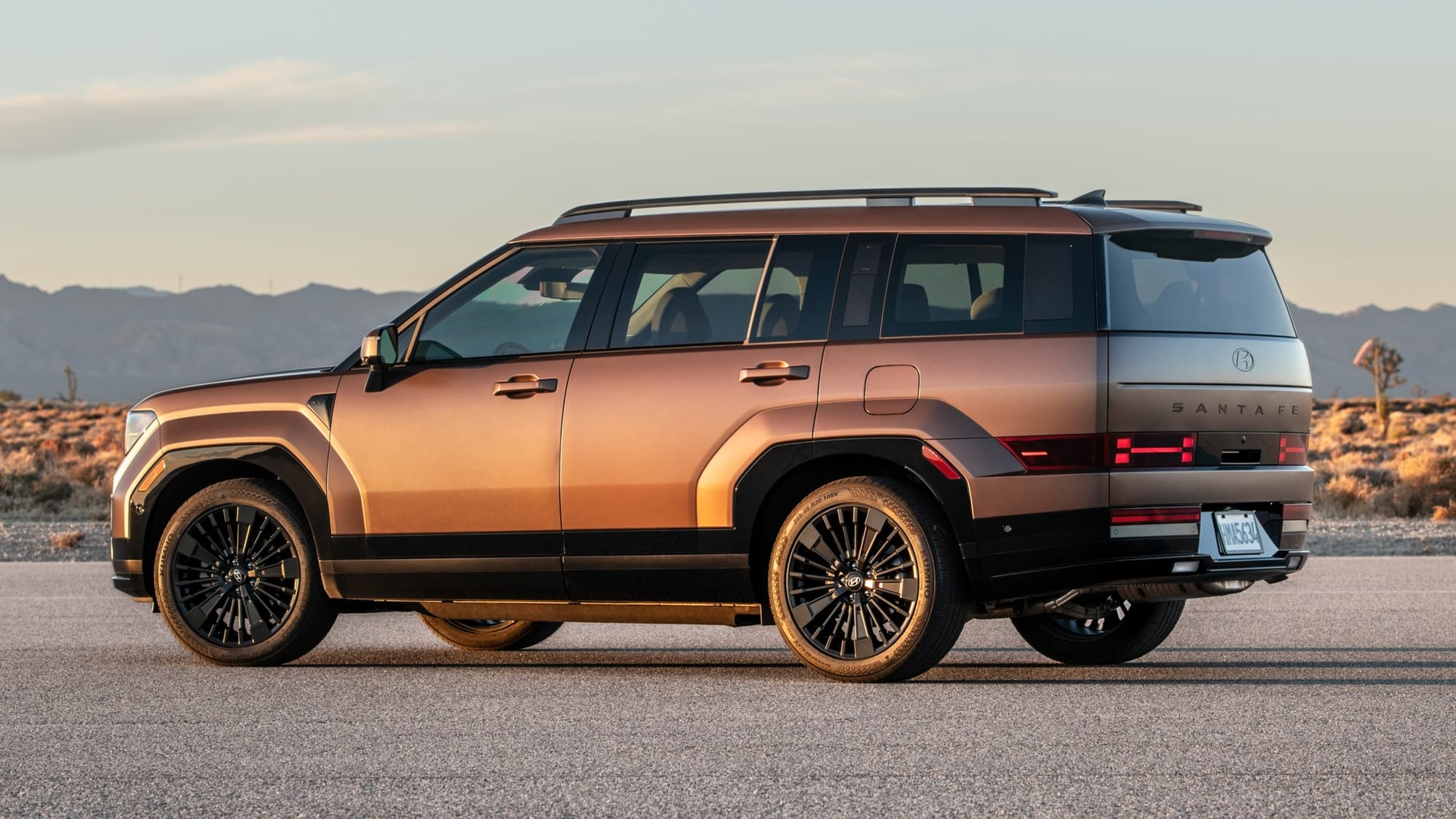
The Santa Fe EREV signals a strategic shift in how automakers approach electrification targets. For those unfamiliar with extended-range electric vehicles (EREVs), check out our explainer here. While the core concept is not new, EREVs are gaining traction as practical alternatives to battery-electric vehicles (BEVs) and short-range plug-in hybrids (PHEVs).
The central benefit rests in the layout: the gasoline-powered generator extends overall driving range without requiring an immediate plug-in stop. Although owners will still utilize overnight charging, the architecture eliminates range anxiety compared to a pure BEV. For the Santa Fe EREV, Hyundai targets “more than 600 miles” of total range.
Hyundai will build the new EREV at its manufacturing plant in Montgomery, Alabama, alongside standard gas and conventional hybrid Santa Fe trims. The model is part of a broader slate of 58 new products slated for North America by 2030. To meet its early-2027 arrival target, production should ramp up late this year or in very early 2027. We reached out to Hyundai for further technical details and will update this story as new information arrives.
The Santa Fe Will Not Be the Only EREV
Genesis, Hyundai's luxury arm, will also introduce an EREV model by early 2027. Brand leadership did not name the specific nameplate slated for the powertrain, but confirmed it will be an SUV targeting more than 640 miles of total range.
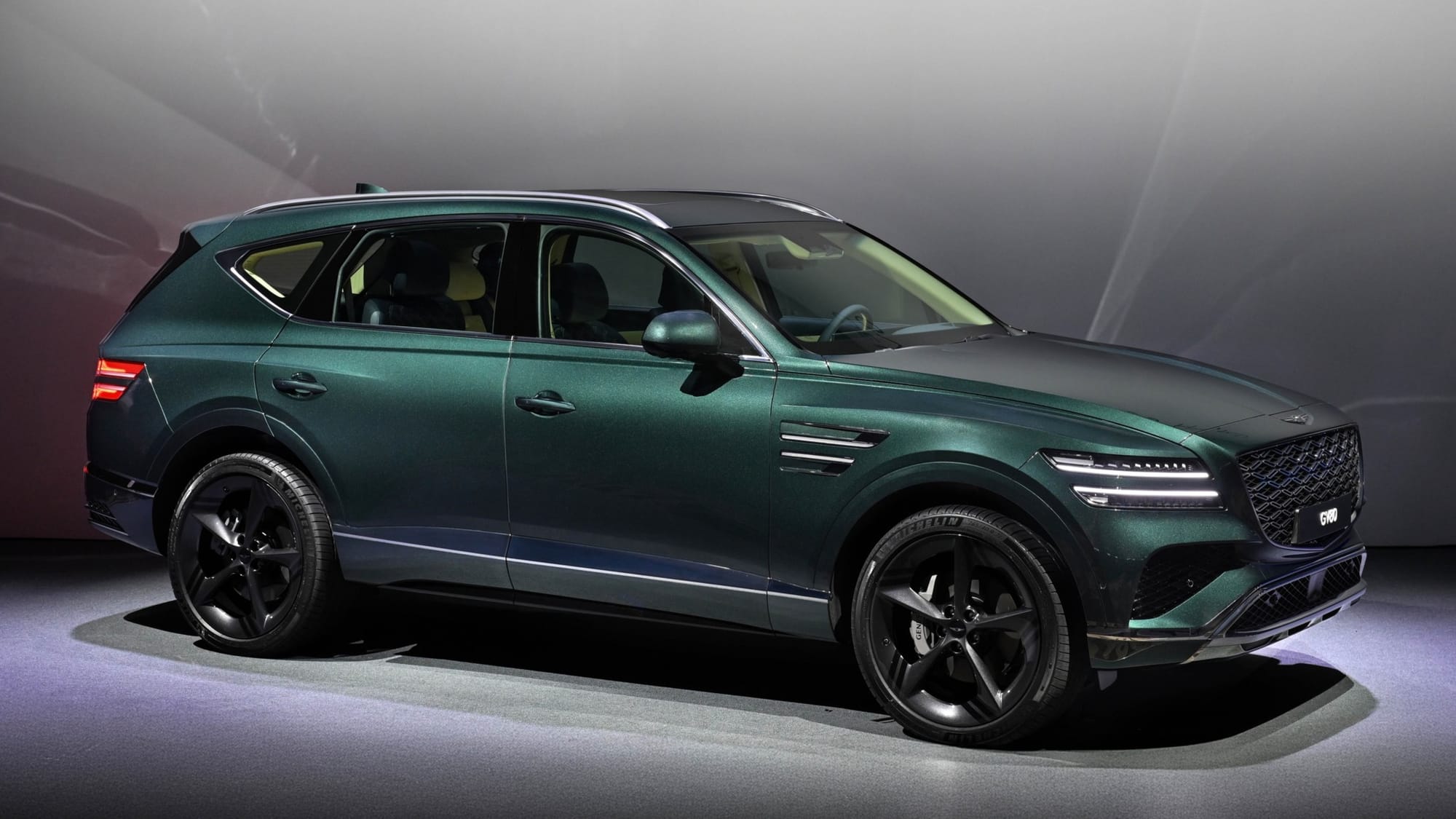
The GV80 Hybrid currently stands as the first and only hybrid model from Genesis, launching in the fourth quarter. The midsize luxury SUV sits on a different platform than the Santa Fe and is produced in Ulsan, South Korea. Hyundai and Genesis share no combustion or hybrid platforms; only the dedicated E-GMP EV platform used for the GV60 and GV90 is shared among Genesis, Hyundai, and Kia.
Hyundai To Mass-Produce Its Own Battery Cells
Key Facts: New cell uses less nickel | Increases life by 20% while reducing cost by 30% | New BMS and fire safety tech
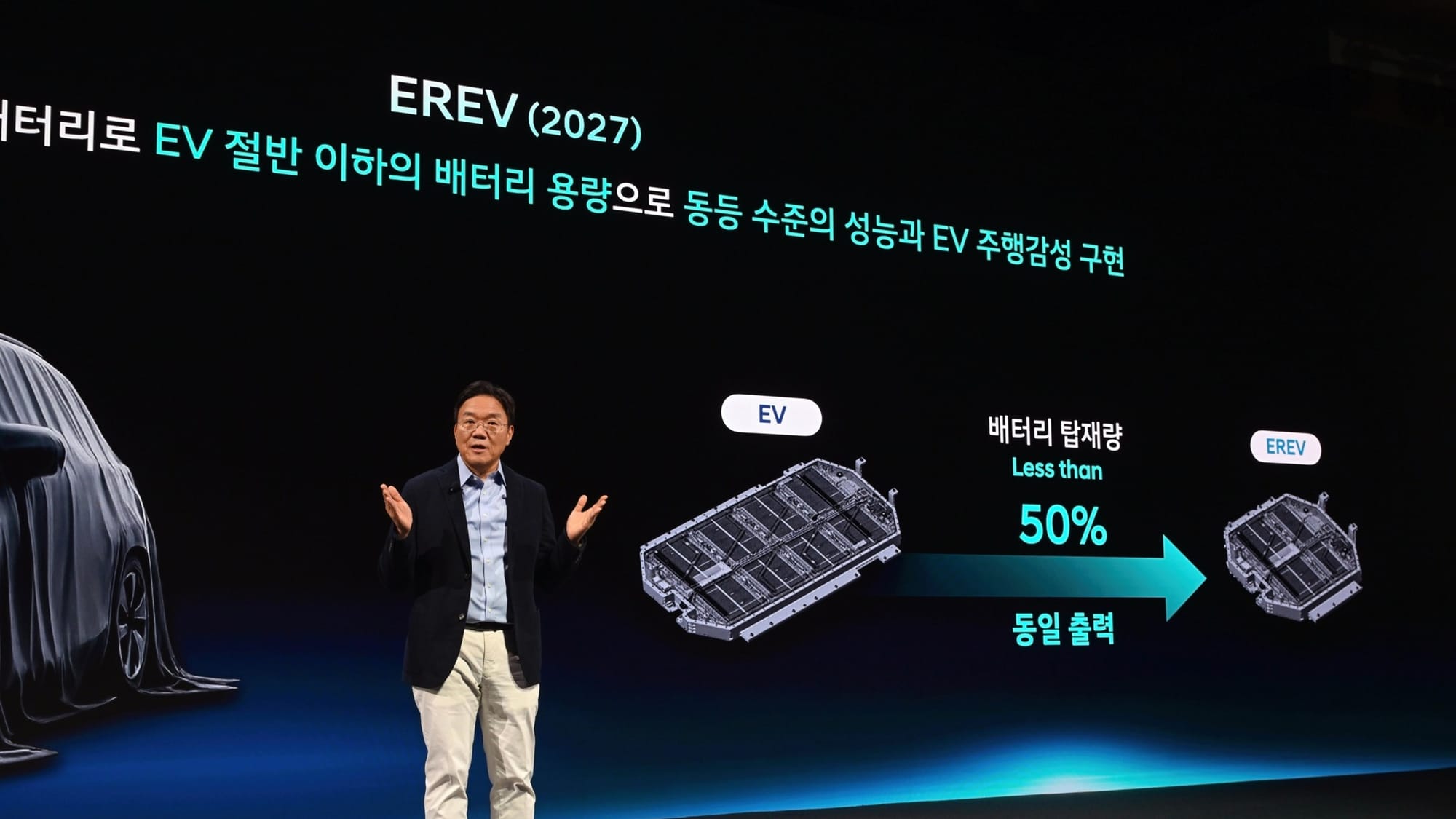
To support its electrified vehicle pipeline, Hyundai will begin producing proprietary high-performance battery cells. The company states these cells will deliver more than double the energy output of its existing units while reducing charging times by 40%. The chemical formulation retains a nickel-cobalt-manganese (NCM) composition but adopts a “mid-nickel” balance to cut overall pack costs by 30%. Hyundai also aims to boost battery service life 20% by 2028 using a cloud-based battery management system (BMS) that monitors real-time telemetry to preempt cell degradation.
Additionally, Hyundai will integrate Thermal Runaway Protection (TRP) engineered to prevent heat transfer to adjacent cells during a thermal event. The TRP system is designed to work across all cell form factors. The automaker validated the technology across more than 200 stress tests on prismatic and pouch-type NCM batteries, with Genesis models receiving the hardware first.
New Hyundai N and Body-On-Frame Models Are Coming
Key Facts: 100,000 units per year target for N vehicles | Midsize BOF pickup still coming
Performance enthusiasts also received confirmation of new hardware. Hyundai is targeting 100,000 annual N performance units globally by 2030, though executives did not confirm specific nameplates or powertrain configurations.
Hyundai also reiterated its commitment to body-on-frame (BOF) architectures for light commercial vehicles and a midsize pickup. Following the reveal of the BOF-based Boulder SUV concept at the 2026 New York Auto Show, details on the production pickup remain limited. The truck is widely expected to share engineering with the Kia Tasman platform for North America, competing against the Ford Ranger, Chevrolet Colorado, and Toyota Tacoma. Hyundai leadership confirmed the American-assembled truck will be exported to global markets.
Additional Highlights from Investor Day
Key Facts: More hybrids coming | Waymo Ioniq 5 robotaxis deploying soon | Atlas to be used at Metaplant by 2028
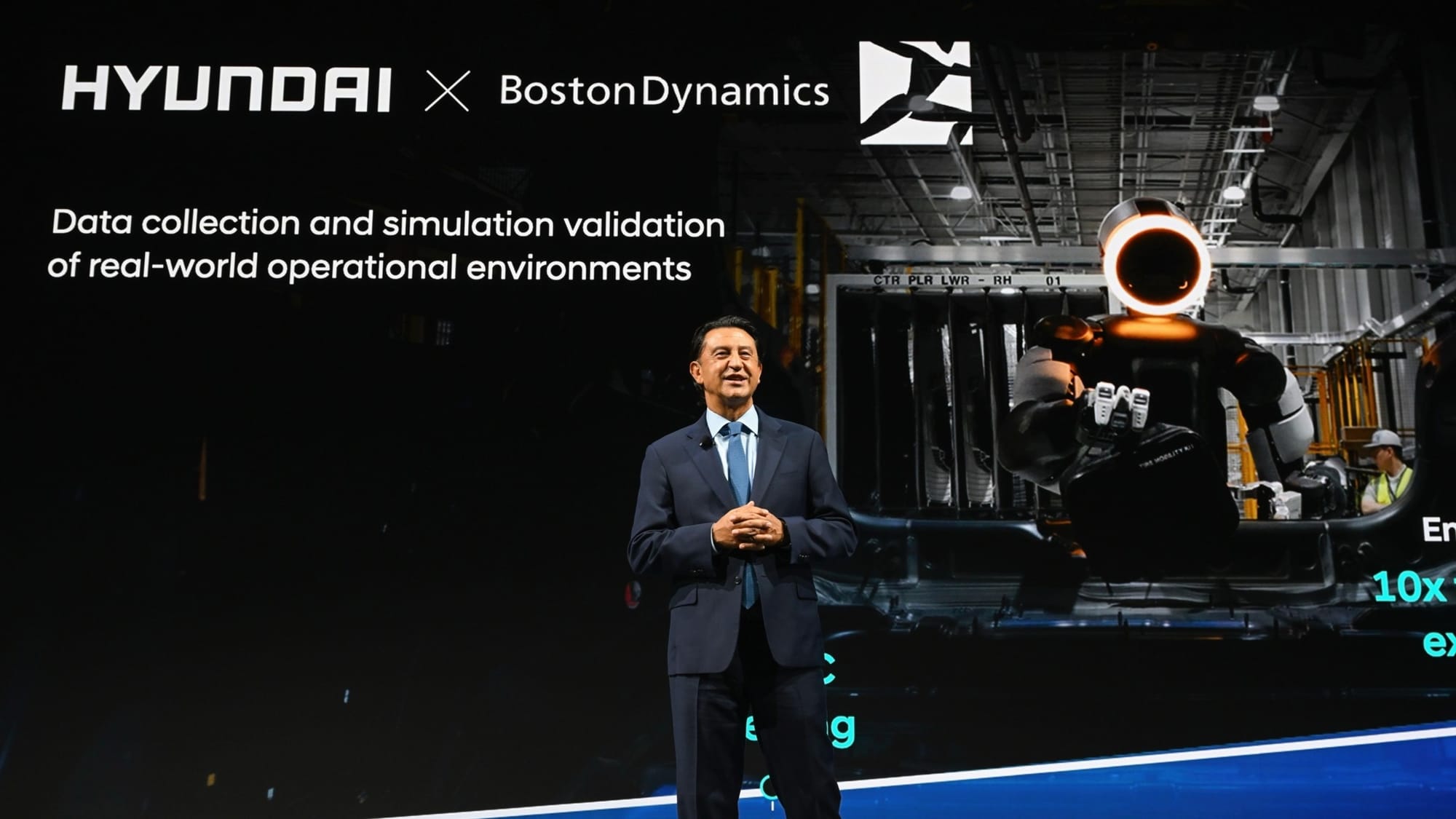
Along with 58 new regional models—including more than 10 dedicated hybrids—Hyundai aims to scale North American manufacturing to 500,000 units annually by 2030. Sourcing for regional components will expand from 60% to 80% by the end of the decade.
Hybrids are projected to represent 50% of North American sales volume, with production split between the Alabama facility and the Hyundai Motor Group Metaplant America in Ellabell, Georgia. Electrified models already represent significant volume for the brand, accounting for 33% of the 450,568 units sold through the first half of 2026.
Autonomous vehicle initiatives also saw milestone updates: the first commercial Ioniq 5 robotaxis built under the Waymo partnership will arrive in the fourth quarter. Hyundai will also integrate the vehicles into its Motional mobility fleet alongside planned rollouts with Uber and Lyft.
On the robotics front, Hyundai plans to deploy Boston Dynamics' Atlas humanoid robot at the Georgia Metaplant by 2028, expanding on technology under development since 2013.
Support Independent Automotive Journalism

If you enjoy deep-dive technical breakdowns and real-world automotive reporting without intrusive ads and subscriptions, consider supporting our work on the Carbage Patreon. You can also grab exclusive gear and apparel over at the Carbage Merch Shop to keep our independent coverage running full throttle.

Comments ()