
Why Your BMW Could Roll Away in Park: The Driveshaft Spline Defect Explained
BMW has recalled 2021-2026 5, 7, and 8 Series over a rollaway issue when parked, but the fix is rather unusual.
Quick Summary:
- Rear Diff Pinion Splines: The splines on the differential pinion shaft and flange wear enough to cause issues, including a roll away risk.
- Gluing the Pinion Flange?: Yes, an industrial adhesive is being used to fix the issue but isn't a permanent gluing like structural adhesives.
- The Driveshaft May Get Replaced: In addition to the adhesive, the rear driveshaft may get replaced if there are signs of wear on the pinion shaft and flange.
It has become a habit for nearly every driver of an automatic to shift into Park and expect the car to stay put. Many newer vehicles prevent movement by using both the mechanical parking pawl to lock up the drivetrain and an automated system to engage the parking brake. Unfortunately, older cars (including those equipped with an electronic parking brake) and many new ones still rely on the driver to engage the handbrake manually, or they simply depend on the transmission to keep the vehicle stationary. This can lead to disaster if the pawl breaks, becomes dislodged from misalignment, or something happens to the primary drive differential. Owners of 2021 to 2026 BMW 5, 7, and 8 Series models are finding this out the hard way thanks to a defect in the rear differential and driveshaft that can cause a sudden loss of drive power or allow their expensive sedan to roll away. But the most intriguing aspect of this recall campaign is the remedy.
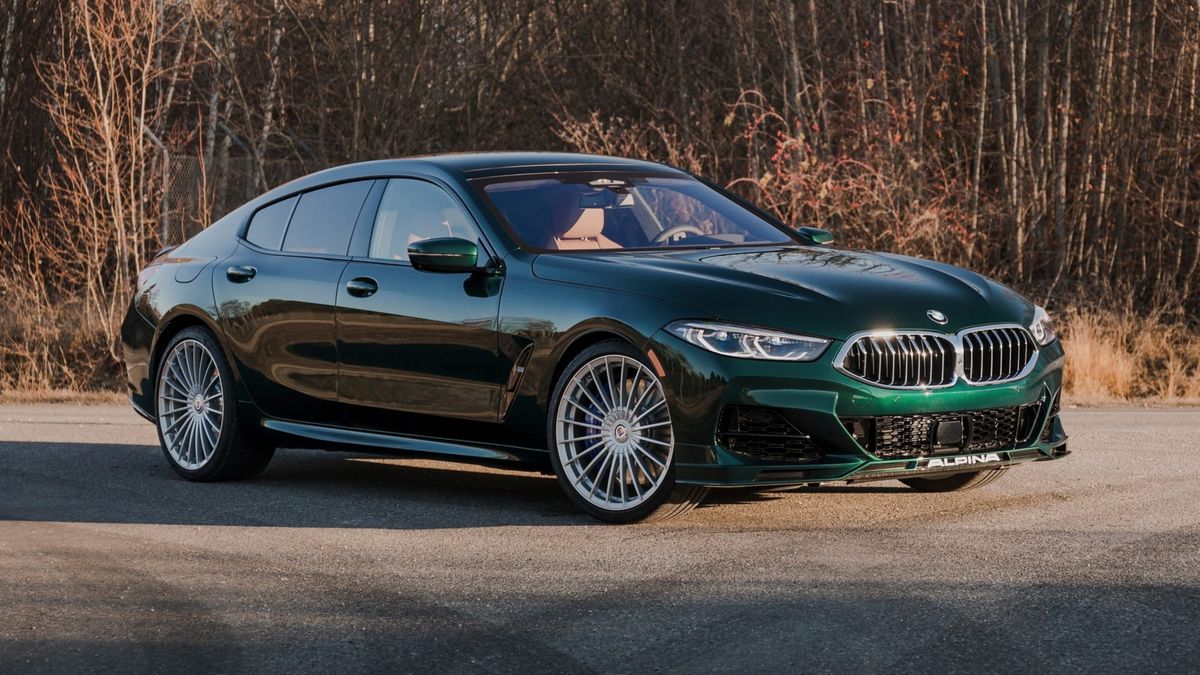
The issue involves the 2022 to 2026 BMW 8 Series Gran Coupe, including the 840i, 840i xDrive, and Alpina B8 Gran Coupe; the 2024 to 2026 750e xDrive PHEV sedan; and the 2021 to 2023 5 Series sedans, including the 540i, 540i xDrive, and M550i xDrive. What they all have in common is their rear differentials and how they connect to the driveshaft.
The Issue
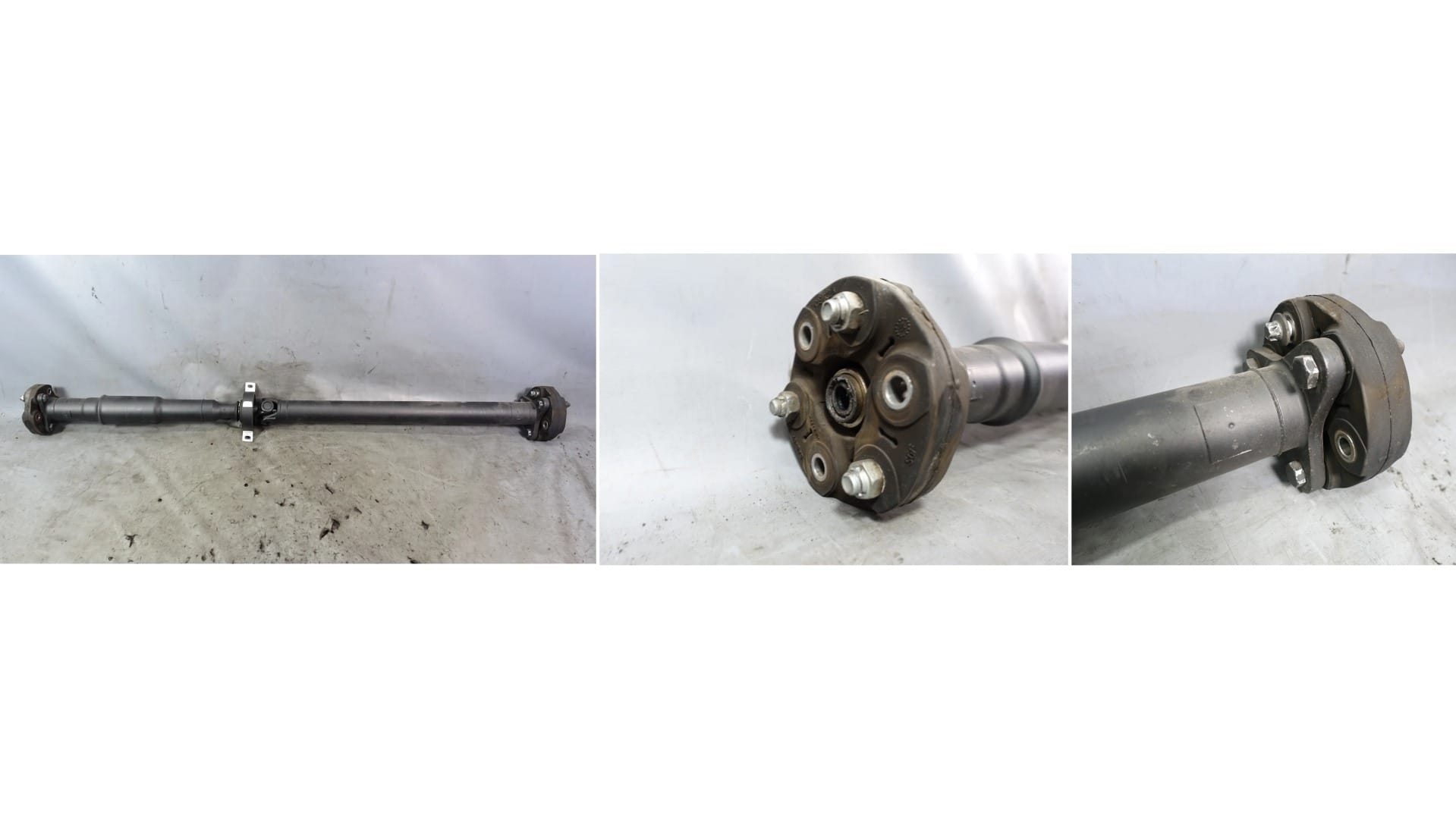
Instead of using a traditional constant velocity (CV) joint or universal joint, all of those vehicles utilize a rubber flex joint with tri-lobe flanges connecting to either side of this joint. The driveshaft side of this flange is welded solid to it, but the differential pinion flange mounts using a splined recess and a retaining nut holding it to the pinion shaft with matching splines. These splined parts are the issue at hand for these BMW models.
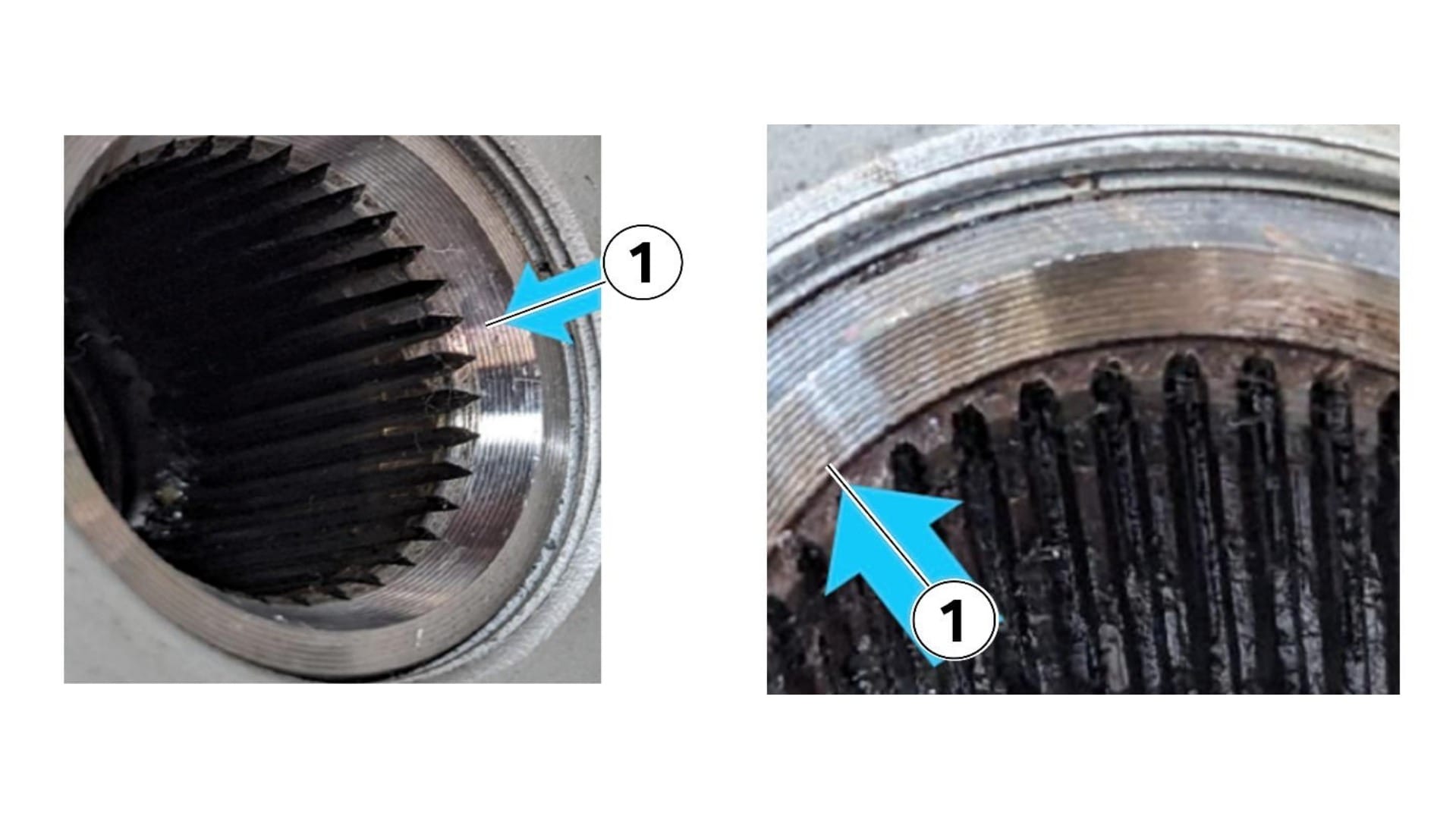
What BMW has found is that the pinion flange and shaft can start to wear. This not only creates excessive movement that impacts the beveled edges of both the flange and pinion splines, but it can eventually shear the splines away entirely. That causes a loss of rear drive, along with the possibility of the car rolling away when parked on RWD models. When splines wear severely enough, drivers will feel or hear unusual clunking around the rear axle or the rear of the cabin.
The Fix: Gluing the Flange to the Rear Differential?
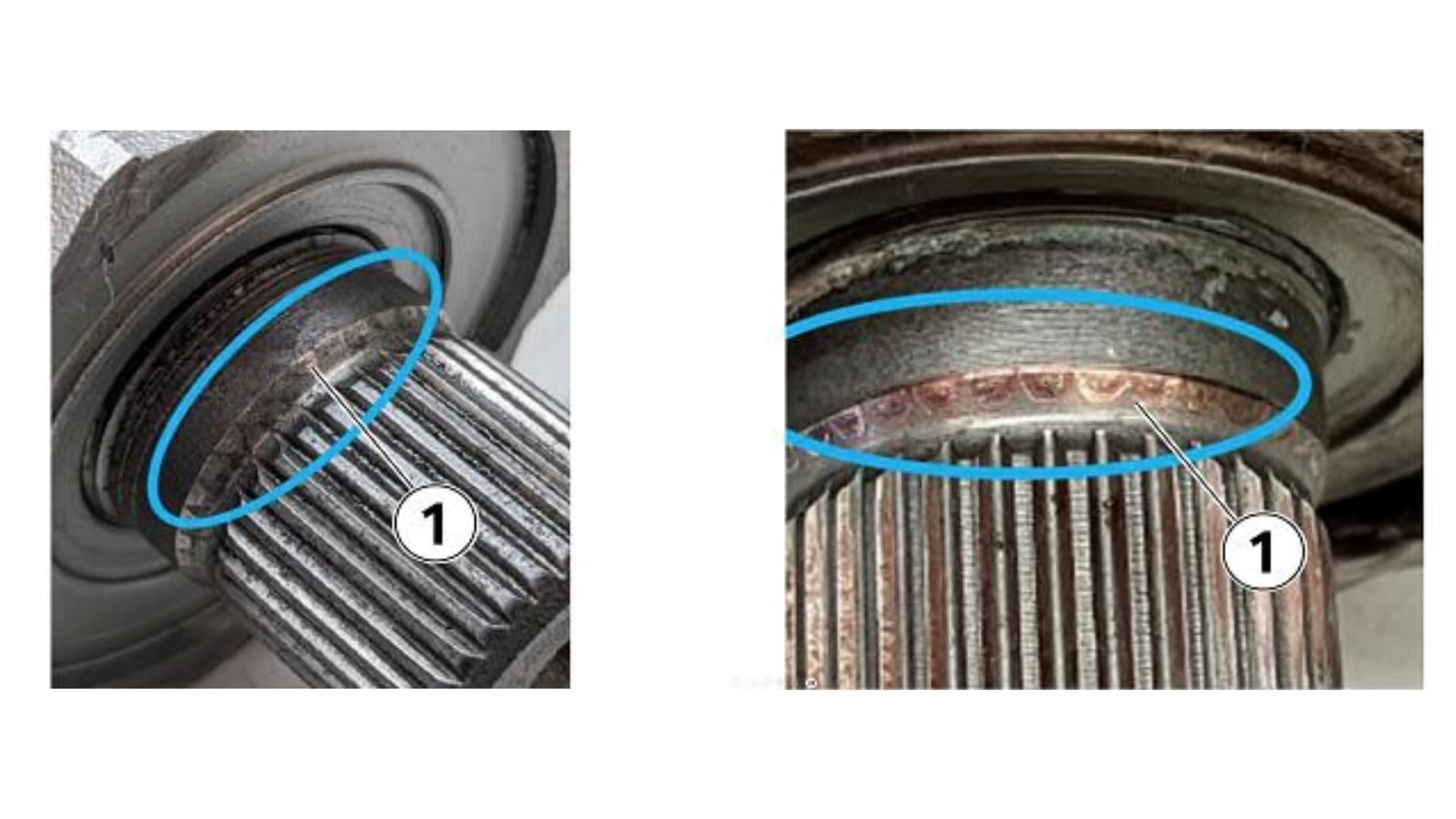
BMW technicians will remove the driveshaft and pinion flange to inspect for this wear (including excessive corrosion), and they will proceed down one of two paths. If the wear and corrosion are excessive, they will replace the driveshaft, the differential, or both, depending on which component has sustained significant damage. Technicians will look for signs of severe rust, worn down or missing splines, impact marks on the flange’s tapered mating surfaces, or a combination of all three.
If the wear is within normal tolerances, or if technicians must install new parts (including a full rear differential replacement), BMW instructs them to “glue” the pinion flange to the shaft. The adhesive is neither Elmer's nor standard superglue, but rather an industrial retaining compound manufactured by Loctite called 658. According to its product description, 658 is a green urethane methacrylate engineered for bonding “cylindrical fitting parts” like gears, pulleys, and core plugs made of steel, stainless steel, and aluminum.
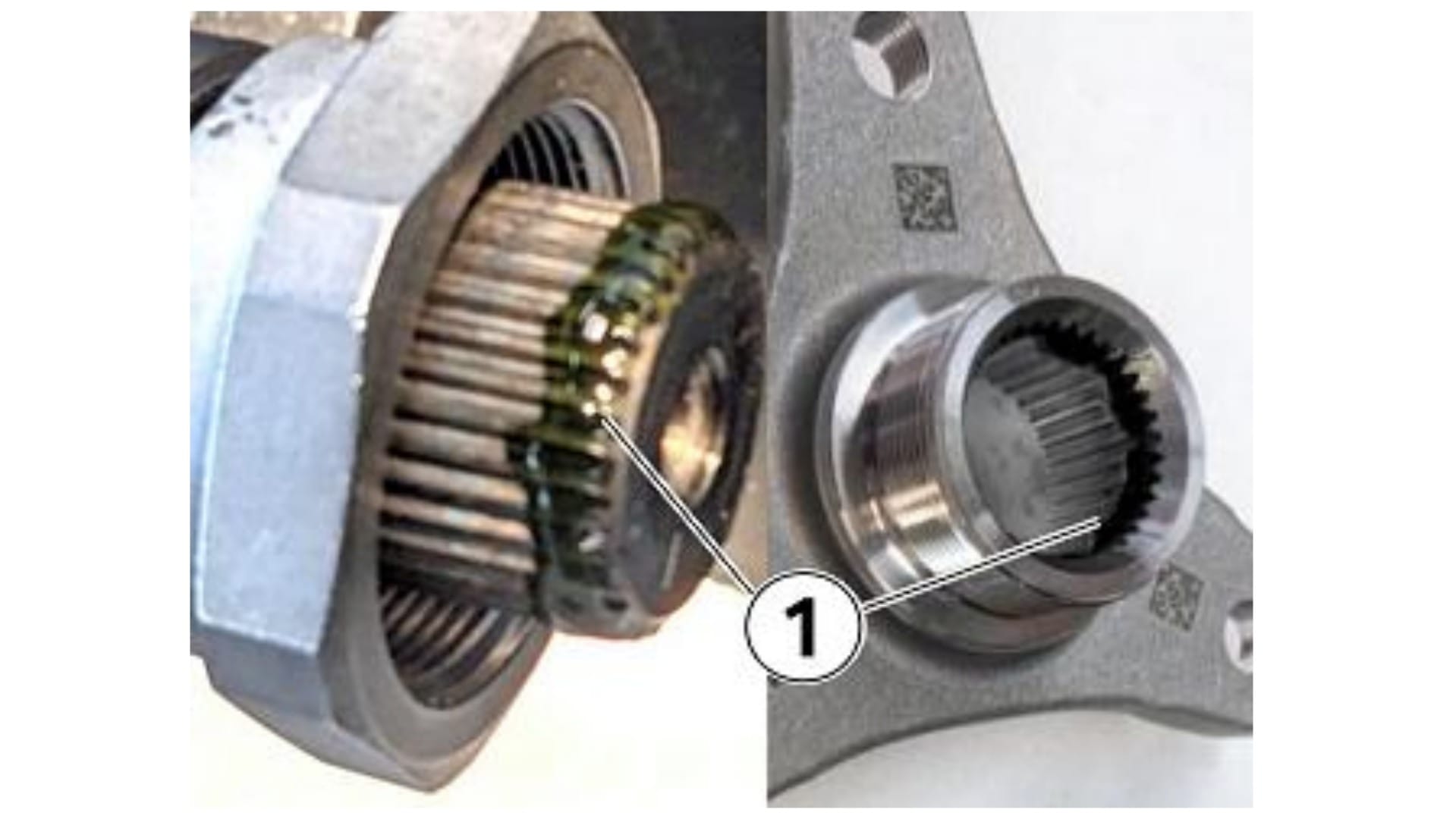
To apply this adhesive, BMW states technicians must clean each surface using brake cleaner and dry both components thoroughly. There should be no grease or oil present, and none can be applied; otherwise, the adhesive bond will fail. Technicians will apply roughly 0.5 grams to the leading edges of the mating spline surfaces on both the pinion shaft and flange. That provides sufficient coverage to distribute the 658 evenly before allowing it to cure for at least four hours. The vehicle can be rolled by hand if necessary during this window, but it can only be moved by pushing. Any sudden or harsh movement risks rubbing the mating surfaces, and Loctite 658 requires a steady bond gap to cure properly.
For anyone concerned that this creates a permanent chemical bond, Loctite 658 still allows for mechanical disassembly. It functions as chemical reinforcement for the pinion flange alongside the lock nut, acting similarly to the threadlocking compounds that made Loctite a staple across assembly and repair shops. According to Loctite, removing parts bonded with 658 requires only standard hand tools. However, technical documentation notes that applying localized heat up to 480 degrees Fahrenheit helps if hand tools alone cannot break the bond, or technicians can apply as much heat as possible alongside mechanical pullers and leverage tools.
The Driveshaft Will Also Get Replaced
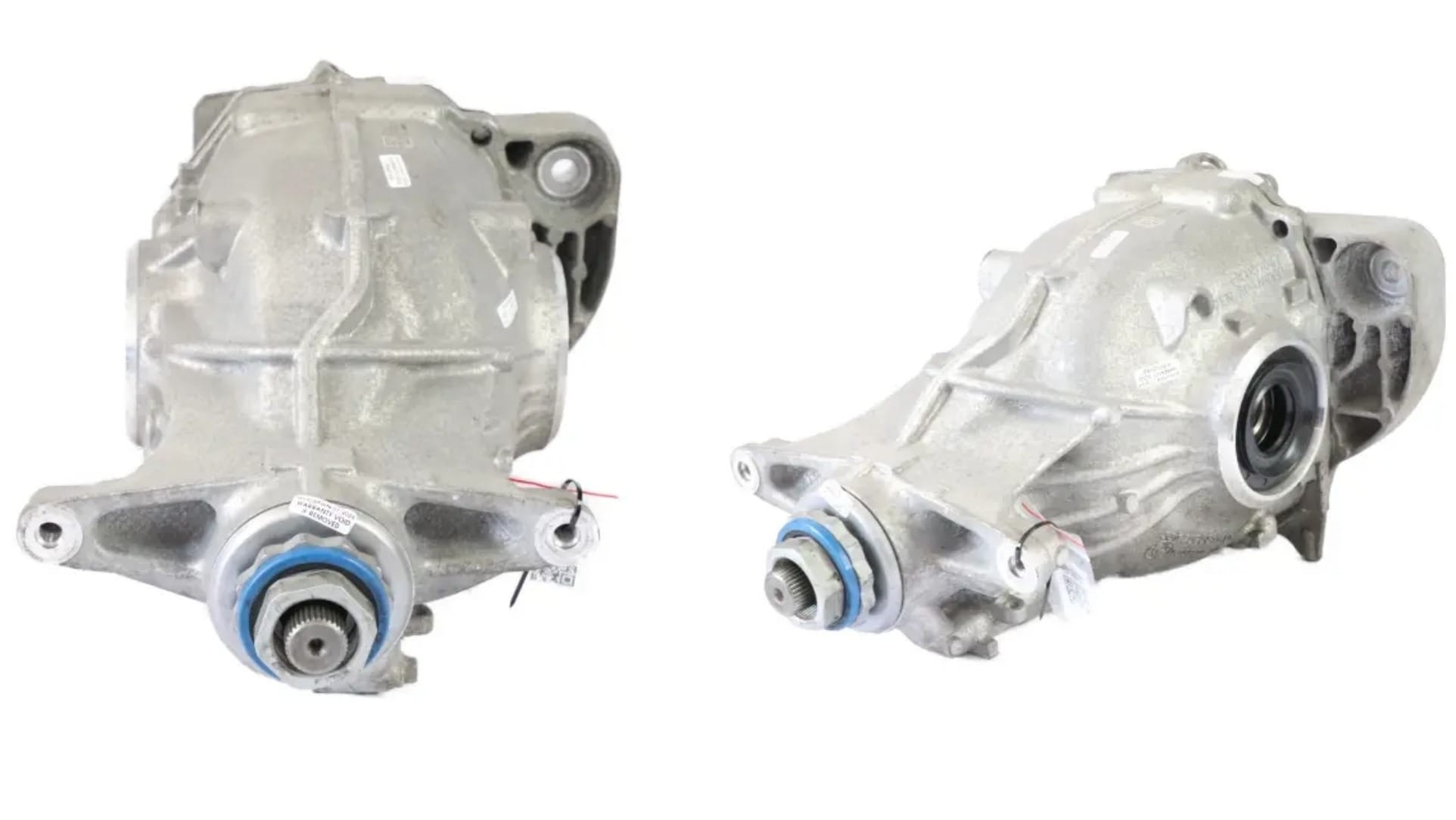
Another unusual wrinkle in this recall procedure is that BMW will replace the driveshaft if a technician finds spline wear, yet determines the damage is not severe enough to warrant a full rear differential assembly replacement. We reached out to BMW for technical clarification on this protocol, but did not receive a response before publication.
Our best educated assessment based on BMW part catalog data is that the rear pinion flange comes preassembled to the driveshaft on these sedans rather than being cataloged as an individual serviceable line item. OEM suppliers and aftermarket performance companies offer individual flanges, but BMW supplies it as an integrated assembly for faster dealership installation.
Just as with an assembly that passes inspection without excessive spline wear, technicians apply the 658 retaining compound before sliding the replacement driveshaft flange onto the differential pinion shaft. Below is a table of the full repair procedure that BMW technicians will use for the 26V525 recall and the parts will become readily available to your local BMW dealership by October 2nd.
How Long Will This Adhesive Last?

If your vehicle is scheduled for this recall and requires the retaining compound, there is little cause for concern. Provided your BMW technician cleans the metal properly, applies the 658 compound evenly, and allows the specified cure time, the bond should last for the life of the vehicle, or at least until the pinion flange requires disassembly. Think of it like high-strength threadlocker, which routinely holds for years until a technician applies a breaker bar or heat.
A review of the Loctite 658 technical data sheet reveals an environmental aging profile tested through 5,000 hours (roughly 208 days). As long as the interface remains below 300 degrees Fahrenheit, it maintains its structural holding strength over the lifespan of the assembly. Solvents such as gasoline, diesel exhaust fluid (DEF), ethanol, and a 50/50 water-glycol coolant mix will degrade uncured anaerobic resins, but once cured, Loctite 658 retains 75% to 90% of its sheer strength after 5,000 hours of continuous exposure at operating temperatures between 72 and 189 degrees Fahrenheit.
Support Independent Automotive Journalism

Technical investigations like this driveshaft teardown take time, shop manuals, and independent research. If you appreciate no-BS technical analysis without corporate interference, consider backing our work directly on Patreon. You can also show your support by picking up shirts, decals, and gear over at the Carbage Merch Shop.



Comments ()